The Social Dilemma: Why Can’t We Stop Looking Away?
What if the most dangerous rabbit holes aren't the ones we fall into, but the ones we willingly keep scrolling through?
What if the next swipe is the one that finally explains everything?
Or the one after that.
That’s typically how it starts.
Just one more TikTok.
Just one more Snapchat.
Just one more post.
Just one more comment section.
Because if something important is happening, you’d want to know.
Right?
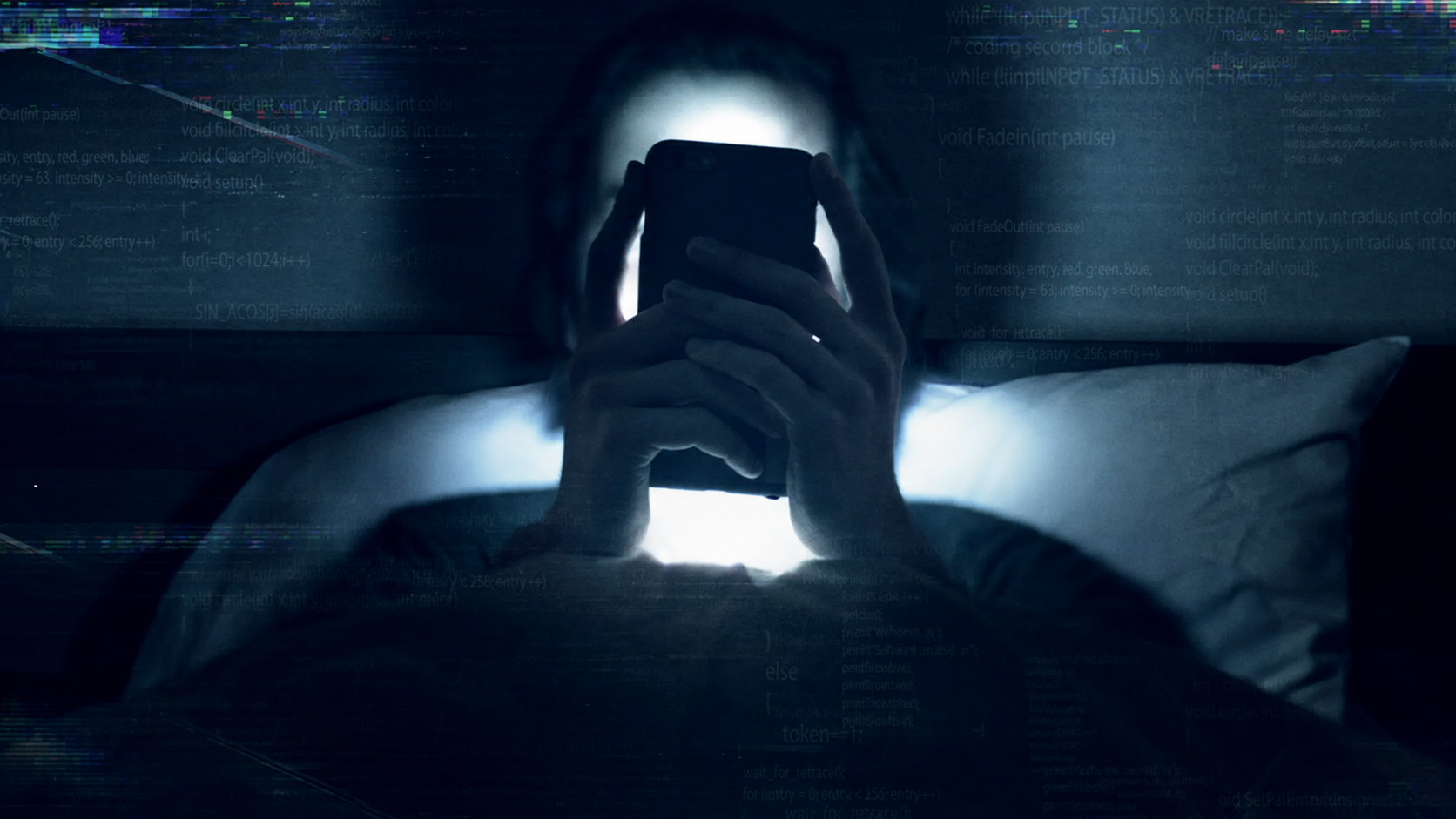
Except twenty minutes later, you’re no longer scrolling because you’re curious.
You’re scrolling because stopping is suddenly out of the question.
You tell yourself you’re staying informed.
In the know.
In the loop.
Your heart rate has climbed.
You don’t feel any safer.
You don’t feel any smarter.
You just…
Keep…
….scrolling.
Which raises a question.
If doomscrolling consistently leaves us feeling overwhelmed, anxious, and emotionally exhausted..
Why does it feel IMPOSSIBLE to stop?
The Social Dilemma appears to answer this question by pointing towards the technology itself. The algorithms. The notifications. The infinite feeds.
But underneath the documentary, there is a much more unsettling idea.
Maybe our phones aren’t creating the problem itself.
Maybe they’re simply facilitating a behavior that was always inside us.
Psychologically, humans are wired to notice any surrounding danger.
Long before smartphones, paying attention to threats increased our chances of survival. Missing one predator could cost everything.
Missing an update on Mormon Wives?
Not so much.
Psychologists call this negative attention bias.
Our brains naturally prioritize information that feels threatening because, for thousands of years, that strategy kept us alive.
Today, however, danger doesn’t hide in the woods.
It lives in our pockets.
Notifications.
Breaking news.
Emergency alerts.
Economic crashes.
Wars.
Natural disasters.
A headline that begins with:
“You need to know….”
And suddenly…
You do.
Or at least your brain thinks you do.
One of the most unsettling moments in The Social Dilemma isn’t when the documentary explains algorithms or what's going on behind the scenes of developing these apps.
It’s when you realize they aren’t forcing you to stay.
They’re predicting that you will.
Every recommendation.
Every autoplay.
Every notification.
Every perfectly timed headline.
All of these are built around one psychological assumption.
If we think the next piece of information might reduce uncertainty...
we’ll keep looking.
Even when it never does.
Swipe.
Another video.
Swipe.
Another opinion.
Swipe.
Another disaster.
Swipe.
Another person telling you why you shouldn't be worried.
Eventually something strange begins happening.
You’re no longer searching for new information.
You’re searching for relief.
Those two things sound almost identical.
But psychologically…
They couldn't be more different.
Researchers describe this as a reinforcement cycle.
Most of what we consume doesn’t actually satisfy us.
But every once in a while…
There's one article that answers a question.
One update that feels useful.
One post that genuinely teaches us something.
That unpredictable reward quietly trains the brain to keep going.
Maybe the next swipe will be worth it too.
Maybe the next one.
Or the one after that.
Then something even stranger happens.
The more information you consume..
The less certain you feel.
Psychologists call this cognitive overload.
Too many facts.
Too many opinions.
Too many possibilities.
Eventually, your brain stops organizing information.
It simply reacts to it.
The scroll that promised clarity slowly begins producing confusion instead.
Fear of missing out only deepens the cycle.
Because putting your phone down doesn’t feel like resting.
It feels like abandoning your post.
Like the world might move on without you. Life certainty exists…
Just outside your reach
Maybe that's why the scroll never ends.
Not because there isn’t enough information.
But because certainty was never waiting for us at the bottom of the feed.
And maybe….
That’s what makes doomscrolling so frightening.
It doesn’t trap us by making us afraid.
It traps us by convincing us that if we leave now…
We might miss the one thing that finally makes everything make sense.
References
Never miss an issue of The Cognitive Code
Get the next one in your inbox. Free, and one click to leave.
0 Comments
No comments yet
Keep reading
A fresh mix from across our archive