
The Odyssey’s Art of Redirection
The powerful tale that Christopher Nolan’s adaptation of The Odyssey brings to the table can teach us how to redirect our path with wisdom rather than pride. But how does Nolan unravel the mysteries of man in his adaptation?
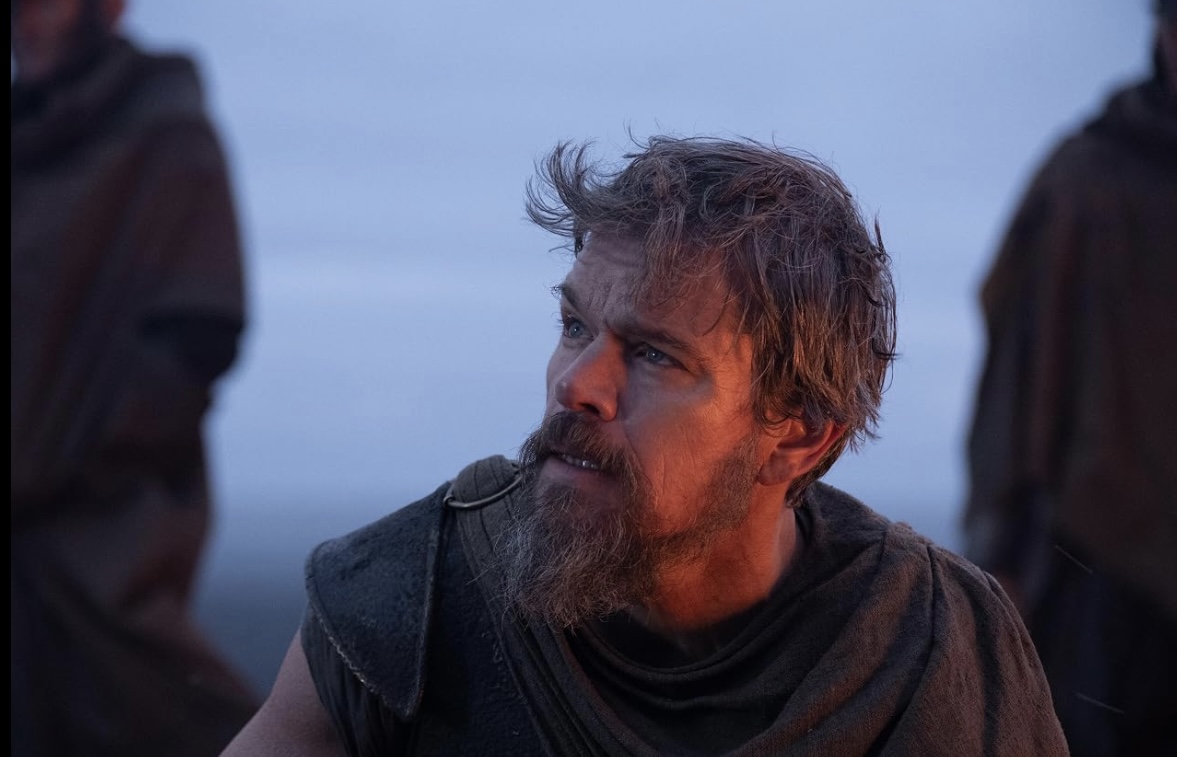
Homer's The Odyssey is a tale as old as time itself, and as we witness Nolan's spectacle on the big screen, we can't help but uncover the roots of men who lead us on a voyage and redirect their paths every step of the way.
Whether it be redirecting the mission to return home or to leave it out of fear of how much we’ve changed, we can see characters such as Odysseus as great examples of taking a step forward in hopes of making progress, only to slowly realize the anarchy he has inspired.
And after watching the film, I wanted to explore the two costs of Odysseus redirecting himself throughout his journey:
1. Reactive Redirection
Reactive redirection comes from pursuing action for oneself rather than for others. The people of Ithaca and the world of The Odyssey at large religiously follow Zeus' law, a philosophy that holds that, through hospitality and kindness, our innermost desires will ensure peace. But when Odysseus hears the siren song, that desire can be portrayed as an act of integrity when, in reality, it was the bite of an apple he will long regret, an apple that can confront the pain and despair for his moral shortcomings. As Homer writes in his original text, “Men are so quick to blame the gods: they say that we devise their misery. But they themselves, in their depravity, design grief greater than the griefs that fate assigns. (The Odyssey)”
Odysseus leads his men into a cascade of unfortunate events. His leadership style tends to shift whenever danger arises, without any insight into how to fully confront it. In many cases, it feels like he does these things for the thrill of it. For instance, during their fight with Polyphemus, after they poke his eye to get him to move out of the way, his men are overjoyed at the prospect of finally being free. But once they depart from his occupation, Odysseus pokes his eye again as an act of vengeance, only to lose more men in the process as Polyphemus decides to briefly follow them into the water.
The same goes for the Laestrygonians, whom they attack without knowing what to do next. It’s clear that when the pursuit isn’t what they planned, Odysseus either goes on a meaningless rampage or decides to run from the opposing threat. His intentions may appear noble or courageous, but in reality, they often lead to diminishing returns. Psychotherapist Kevin Foss describes avoidant behaviors as an “unhelpful behavior.” The purpose of avoiding your mistakes is to avoid the fear of having to overcome them. And because of the mistakes Odysseus chose to make, we see him avoid his surroundings for over 7 years, leaving Penelope and Telemachus without a father to raise him, a husband to love her, and a king to rule Ithaca.
2. Reflective Redirection
Reflective redirection comes from pursuing action for others rather than for oneself. When Cerce turns Odysseus' men into pigs, he comes in knowing that her intentions aren’t innocent, so he proves to her that beyond a man’s destructive nature can come a mentality of ensuring peace through Zeus' Law. At his best, he knows that the challenges he has faced and the pain he has caused will follow him every step of the way, but his chance to redirect can still arise if he intends to maintain this habit.
This is why emotional intelligence becomes important for how Odysseus redirects his actions. When Odysseus returns to Ithaca with the knowledge that Penelope has yet to marry a suitor, he realizes that their love is vastly more important than having her take someone whom she has no affection for. He returns, realizing that he has a responsibility to amend and that his actions in Troy overshadowed any desire to go back home.
During the Battle of Troy, Odysseus's guilt over how his men presumably killed a civilian who happened to take the shape of Athena becomes the ongoing signal of all the distress he has caused. When a philosophy as universal as Zuess’ Law is not followed through, it can cause so much mayhem when that collective belief feels broken. Research suggests that our path towards redirection is only justified when it's consistent with our interests, goals, and values.
So when Odysseus comes to kill the suitors, we as an audience can presume that he has died in Penelope’s arms, hoping for another life he could spend with her, with the dream she had told him earlier in the film. And through his path of reflective redirection, he dreams of Telemachus becoming king, him and Penelope sailing together on a voyage without the unnecessary blood, sweat, and tears.
Conclusion
The Odyssey confronts the question of man through the painstaking choices we make within every expedition we follow. The push we make toward a path of redirection allows us to live our lives differently without regret. Redirection for our decisions offers insights into how we present ourselves. And The Odyssey manages to entangle those truths while uncovering what another path can feel like. And to quote Matt Damon’s Odysseus himself, “The power of the sacrifice is in the cost of the person making it.”
References
0 Comments
No comments yet
Keep reading
A fresh mix from across our archive