The Little Mermaid & Information Gaps
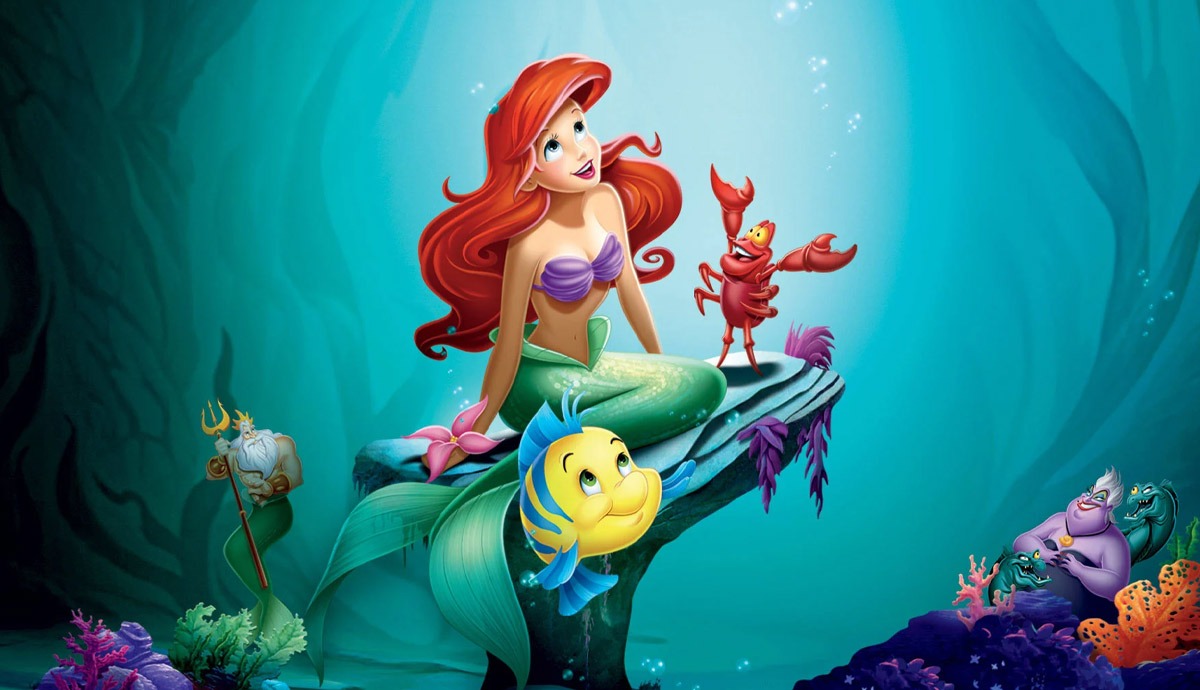
Growing up, The Little Mermaid was one of my favorite movies, and naturally, Ariel was my favorite princess. While, as a child, my reason for this favoritism was the fact that she was a mermaid, as I've grown older, she's maintained that top spot for different reasons. Ariel is both curious and determined, which makes her a fascinating protagonist as she strives to find answers to her questions about the human world.
Ariel's pursuit offers knowledge that can be explained using Russell Golman and George Loewenstein's theory of information gaps. The two define an information gap as "a question that one is aware of, but for which one is uncertain between possible answers" (Loewenstein et al., 2021). Our desire to answer questions or fill that gap motivates us to seek the answer. According to the theory, the more valuable the question is to us, the more resources we'll put towards answering it. For example, Ariel and the human world. She's curious and tries to fill this information gap by collecting human items, watching the sailors, and eventually becoming human. She scales up her efforts to fill the gaps throughout the film, and we get to watch as certain gaps are filled, such as how to use a fork.
While Ariel chooses to turn this curiosity into action and learn more about the humans, not everyone is moved to fill these gaps. Sometimes people conclude what they think the answer is and refuse to change their minds. Take Ariel's dad, King Triton, for example: he has concluded that all humans are dangerous and refuses to let Ariel learn more about them. Despite not knowing much, he refuses to learn more, whereas Ariel acknowledges she doesn't know much about them; this is what's known as intellectual humility. "Being intellectually humble involves understanding your cognitive limitations—in simpler terms, it means acknowledging that you could be wrong about something" (Jayawickreme, 2022). This isn't an easy feat, as we often believe our own thoughts and feelings are correct, especially when they pertain to something we don't agree with. A prime example of this is the song "Under the Sea," in which all the citizens of Atlantis and the ocean folk sing about their superiority over those on land. In contrast, Ariel has a high degree of intellectual humility, which we see throughout her exploration of the human world, as in the dinner scene where she uses a fork to brush her hair. When she learns she is wrong, she accepts it and is even excited to find the true answer.
The Little Mermaid's Ariel is a great example of filling in information gaps and of intellectual humility. These are traits we can learn to emulate that will even benefit us in the long run, especially intellectual humility. It's good to push the boundaries of our understanding and chase what piques our curiosity. While it might not always be easy, Ariel shows us it can potentially lead to our happily ever after.
References
Never miss an issue of The Cognitive Crunch
Get the next one in your inbox. Free, and one click to leave.
0 Comments
No comments yet
Keep reading
A fresh mix from across our archive