
The Flash & The Dopamine Dash: Why Barry Can’t Stop Running
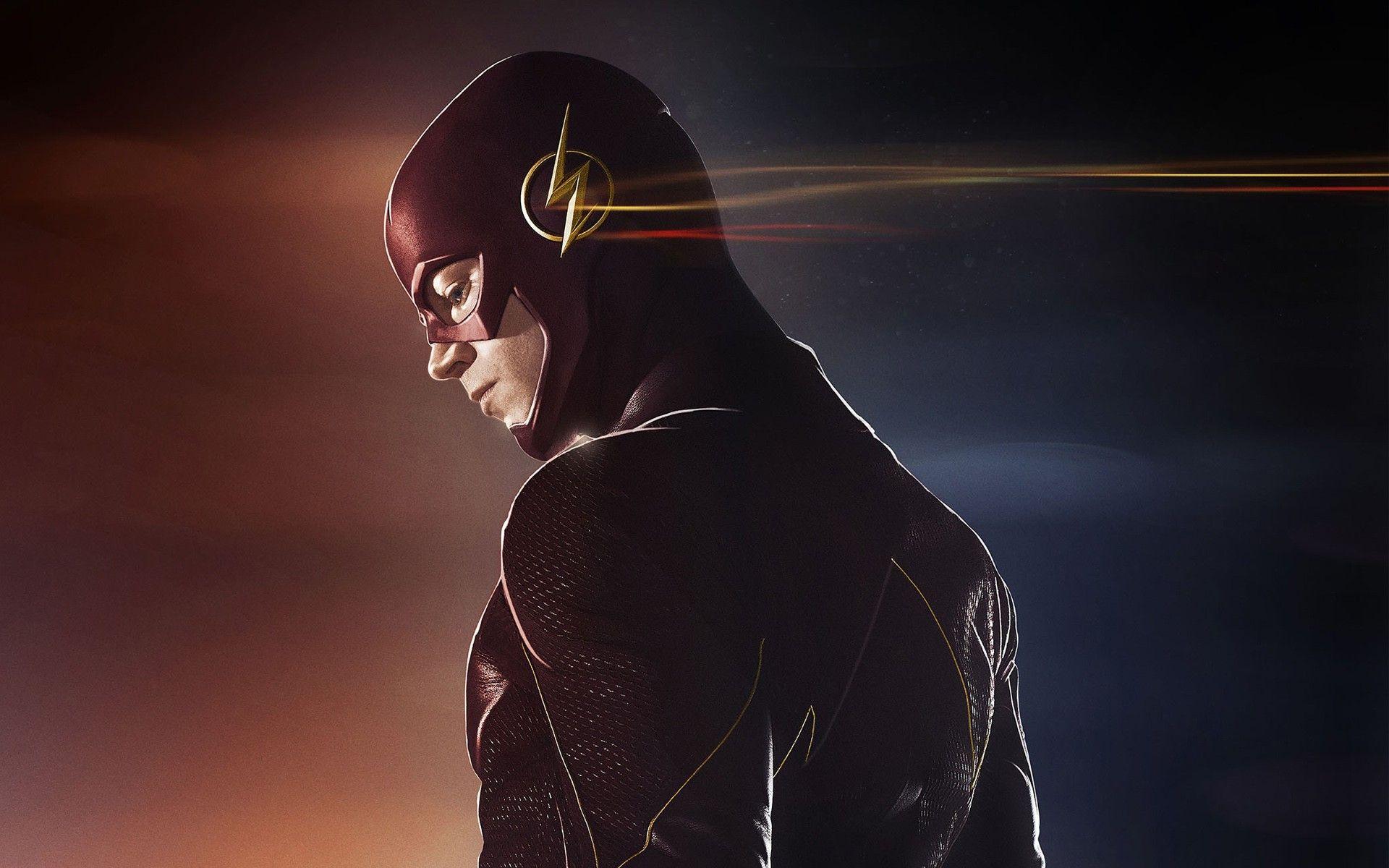
You think Barry Allen runs to save the world. But what if he actually runs because stopping feels worse?
Barry Allen, aka the Flash, the beloved protagonist of The Flash, is known as the fastest man alive, frequently moving at supersonic speeds to prevent crimes. Or so it seems. His motivations stem from the traumatic experience of his mother’s brutal death, driving him to ensure the same never happens to someone else. But what really keeps him in constant motion?
Barry’s heroism and his relentless need to chase the next crisis may not always be rooted purely in moral character. Instead, part of his drive can be traced to the reinforcement loop he is caught in, and the dopamine spikes that come with it.
Barry continually embodies the concept of the dopamine reward prediction error (RPE), which is closely tied to a reinforcement loop. RPE is defined as the difference between the expected and actual outcomes. A dopamine spike is associated with a positive RPE, where an outcome is better than expected, reinforcing behavior. In contrast, a drop in dopamine is linked to a negative RPE, in which outcomes fall short of expectations, discouraging behavior. Barry is a near-perfect illustration of this phenomenon.
To begin with, when Barry first becomes the Flash, he consistently saves people and discovers new abilities. These outcomes exceed his expectations, producing positive RPE and dopamine spikes. These spikes become associated with pushing his limits, leading him to run faster, take bigger risks, and rely more heavily on his powers. This marks the beginning of his growing dependence on running as a source of reward.
As time goes on, Barry begins to expect success, elevating his baseline expectations for outcomes. He comes to believe he can always save everyone and assumes he can solve any problem simply by running faster. This is especially evident in the lead-up to Flashpoint, where, after repeated losses, most notably his father’s death, Barry becomes emotionally overwhelmed and convinces himself that going back in time to save his mother will “fix” everything. The show visually and narratively reinforces this shift as his decision is less calculated and more impulsive, driven by frustration and grief rather than logic. In that moment, Barry isn’t evaluating consequences; he’s chasing a predicted reward, a perfect timeline where everything is restored. At this point, RPE becomes driven more by expectations than by outcomes, making negative RPE increasingly likely.
When things inevitably go wrong, Barry is forced to confront failure, which produces negative RPE and a corresponding drop in dopamine. When he fails to save someone or when unintended consequences of time travel arise (such as Flashpoint, the alternate dystopian timeline created by his interference), he experiences emotional crashes, guilt, and frustration. These negative emotions push him toward impulsivity and desperation, compelling him to keep running in an attempt to “fix” things.
Barry’s time travel missions are perhaps the clearest example of an RPE loop. He expects to fix everything by going back in time, yet events often spiral, becoming more complex or worse, just as seen with Flashpoint. His initial expectations create a vision of a perfect outcome, but reality rarely aligns. While negative RPE dominates, occasional partial successes produce positive RPE, reinforcing the very behavior that causes the problem. And so, the cycle continues, thereby keeping him in motion.
Barry’s time travel missions are perhaps the clearest example of an RPE loop. Circling back to a defining moment in the show, when Barry runs back in time to stop his mother’s murder. In that scene, Barry doesn’t hesitate. He sprints into the past, expecting that saving his mother will fix everything. He watches his past self, hears his mother’s final words, and chooses to intervene, fully convinced of the outcome he has imagined. Yet, as seen with Flashpoint, events spiral and ultimately worsen. His expectation creates a vision of a perfect outcome, but reality fails to match it. The show frames this not just as heroism but as emotional escape, as Barry runs away from grief rather than towards a solution. His identity as the fastest man alive thereby becomes a coping mechanism, reinforcing the idea that constant motion can outrun consequences. While negative RPE dominates, occasional partial successes still reinforce the behavior. And so, the cycle continues, keeping him in perpetual motion.
Therefore, Barry Allen’s motivations are not driven solely by a desire to save the world. They are also shaped by dopamine reward prediction error, a cycle that fuels both his heroism and his restlessness.
Barry doesn’t just chase villains. He’s chasing a moving target: expectation itself.
References
Never miss an issue of The Cognitive Flix
Get the next one in your inbox. Free, and one click to leave.
0 Comments
No comments yet
Keep reading
A fresh mix from across our archive