The Final Whistle: Why Competition Brings Us Together
The FIFA World Cup has always been about more than football. Every chant, every comeback, and every last-minute winner reminds us that competition creates teammates, a sense of belonging, and a shared identity that lasts long after the final whistle.
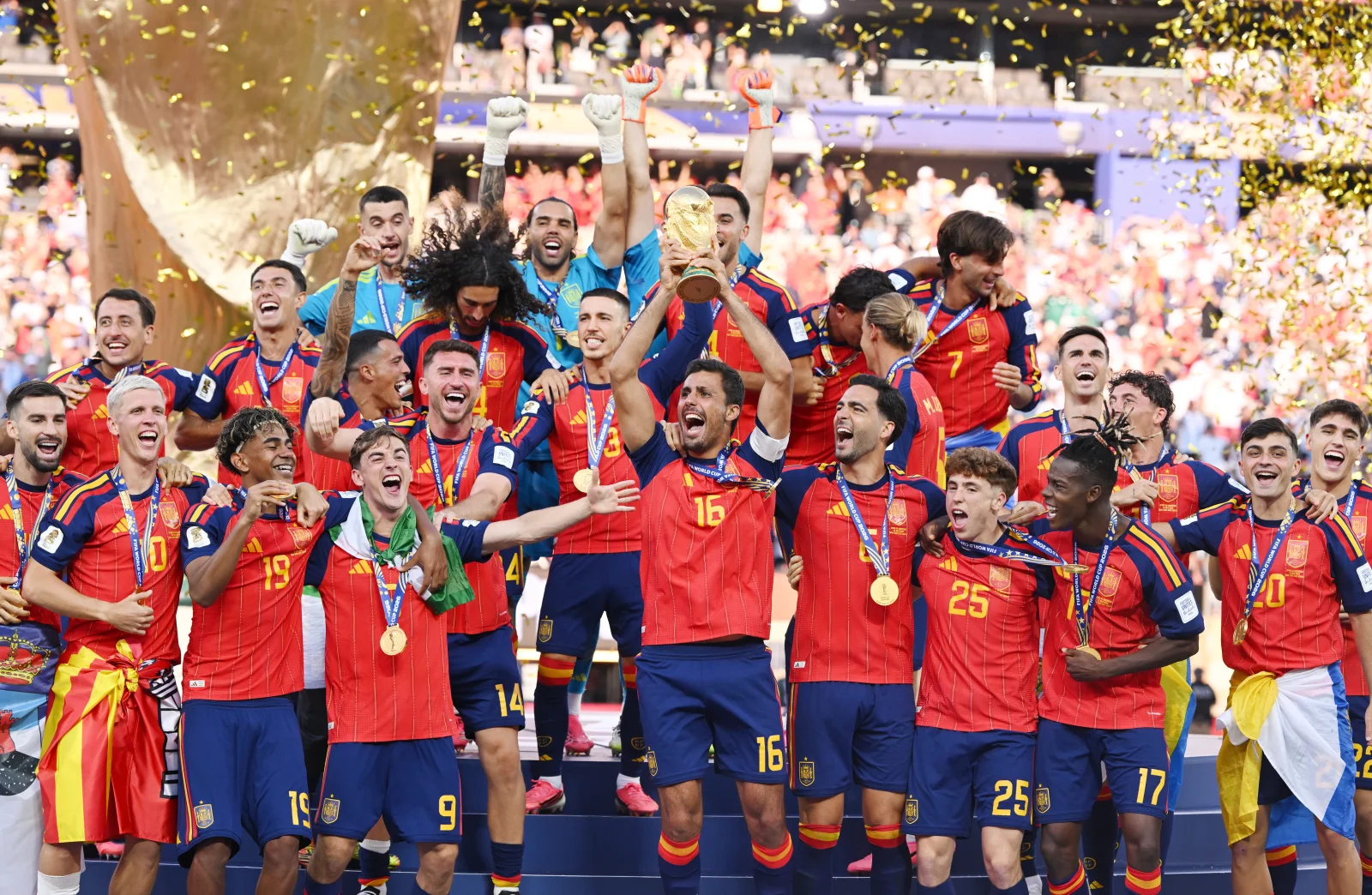
The FIFA World Cup crowns one champion, but every four years it creates billions of teammates.
Every four years, the world divides itself into teams, colors, chants, and flags, and suddenly ‘they’ matter just as much as ‘we’. Packed stadiums erupt in unison, living rooms transform into fan zones, and millions of people find themselves emotionally invested in the outcome of a match played by twenty-two people they've never met. Every pass, every save, and every goal feels like our own. Somewhere along the way, the players stop being ‘them’ and become ‘us’.
In addition to being the biggest sporting event, the FIFA World Cup is also the largest demonstration of social psychology, highlighting how competition brings people together rather than dividing them.
To begin with, this can be explained by social identity theory, proposed by Henri Tajfel and John Turner. The theory suggests that people derive part of their identity from the groups they belong to. These groups become our in-groups, while everyone outside them becomes the out-group. Once we identify with an in-group, its successes and failures become our own.
The World Cup illustrates this perfectly. Fans don't say, "Spain scored." They say, "We scored." A team's victory becomes our victory, and its defeat somehow feels personal. By emotionally tying themselves to every outcome, supporters become the 12th man for the team that they support. Every chant, every celebration, and every collective gasp strengthens the feeling that the team extends beyond the eleven players on the field.
This same psychology also explains why rivalries become so intense. Once we identify with our team, in-group bias naturally follows. We begin favoring "us" while viewing "them" as the opposition. Suddenly, a football match becomes more than ninety minutes of sport; it becomes a contest between identities.
This idea was famously demonstrated in Muzafer Sherif's Robbers Cave Experiment, where two groups of boys at a summer camp quickly developed hostility toward one another once competition was introduced. Sherif found that competition strengthened cooperation within each group while simultaneously increasing conflict between groups. The World Cup follows the same pattern. Every rivalry, whether it's Argentina versus Brazil or England versus France, amplifies emotion because our brains are wired to categorize people into "us" and "them."
Ironically, however, competition only works because of cooperation. Football may celebrate goals, but goals rarely belong to one person. Every successful attack depends on coordinated movement, communication, trust, and sacrifice. The striker may receive the headlines, but the goal often begins several passes earlier. This is precisely why assists are recognized alongside goals, acknowledging that success is rarely individual.
Sports psychologists have consistently found that team cohesion is positively associated with performance, trust, and collective confidence. The strongest teams are not necessarily those with the greatest individual talent, but those capable of functioning as a single unit. The World Cup has reminded us of this repeatedly throughout the tournament. Paraguay's stunning penalty shootout victory over Germany was the product of disciplined teamwork under immense pressure. Likewise, Cape Verde's spirited performance against defending champions Argentina showed how a united team can challenge opponents with significantly greater individual talent. Even the tournament's last-minute winners and nail-biting penalty shootouts reveal the same principle. Under the greatest pressure, teams succeed because everyone trusts one another enough to play as one.
Ultimately, the FIFA World Cup may be decided by goals, but it is driven by psychology. Every chant in the stands, every celebration after a 90+6’ winner, and every tear shed after a missed penalty reflects something much deeper than football, accentuating our fundamental need to belong.
Perhaps that's the World Cup's greatest paradox. Competition may divide us into different colors, flags, and jerseys, but it also gives us a reason to cooperate, both on the pitch and in the stands. And maybe that's why, when the final whistle blows, the game ends, but the feeling of ‘we’ doesn't.
References
Never miss an issue of The Cognitive Flix
Get the next one in your inbox. Free, and one click to leave.
0 Comments
No comments yet
Keep reading
A fresh mix from across our archive