
The Devil Wears Cognitive Dissonance: Fashioning a New Self
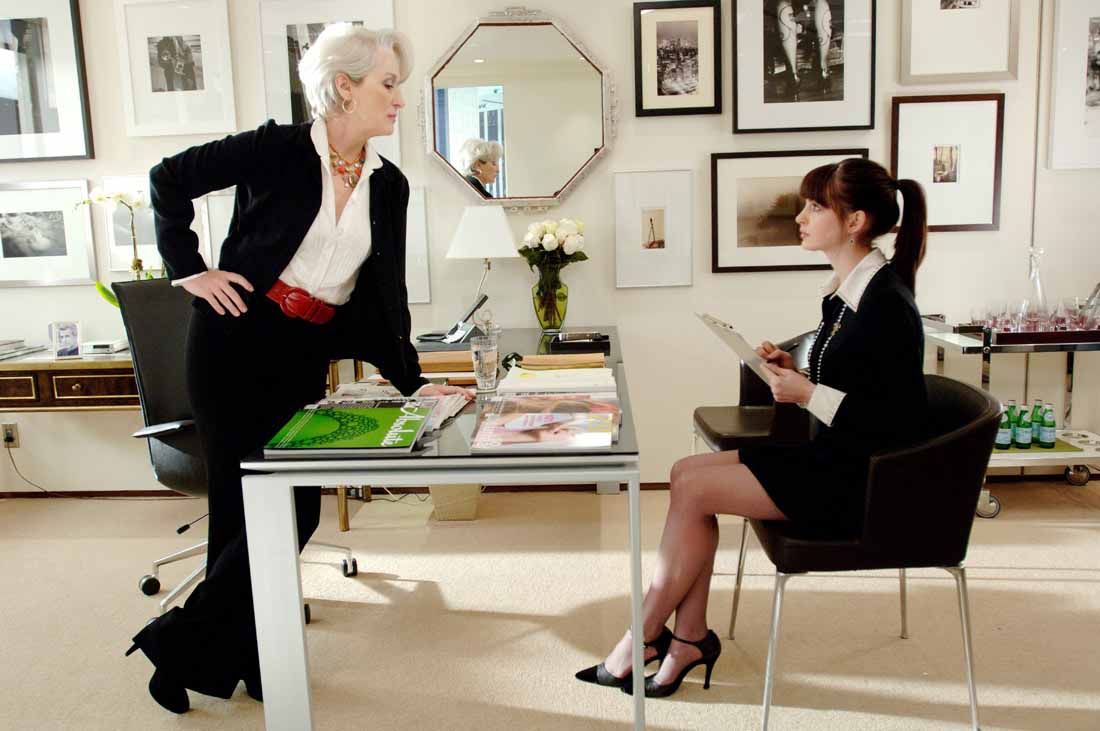
You don’t change your actions to match who you are. You change who you are to match what you do. Andy Sachs did exactly that in designer heels.
Andy Sachs, the leading character of The Devil Wears Prada, is a perfect personification of cognitive dissonance. Cognitive dissonance is the psychological uneasiness caused by a misalignment between an individual’s actions and their beliefs or values (Festinger, 1957). This discomfort often leads individuals to change aspects of their identity, either by justifying their actions or by restructuring their thought processes (Festinger, 1957).
Andy Sachs’ experiences at Runway magazine demonstrate this phenomenon saliently. In the beginning of the film, Andy expresses her disapproval of the fashion industry, calling it superficial, since she was clear about becoming a serious journalist, thereby arguing that the two worlds cannot be integrated. She believes she is morally and structurally different from their line of work and mindset, presenting her identity as one associated with authenticity, practicality, and ambition.
However, after she begins her job as Miranda Priestly’s assistant at Runway magazine, she starts indulging in the industry that she once appraised. As a result, cognitive dissonance arises as her actions increasingly contradict her beliefs and values. This is most evident as she originally dismisses the importance of fashion but eventually becomes emotionally invested in seeking Miranda’s approval and attention, completing all assigned tasks with utmost diligence, thereby succumbing to cognitive dissonance. This is evidenced when Miranda asks Andy to get her daughters the unpublished manuscript for Harry Potter.
Andy repeatedly framed the fashion world and Miranda’s demands as obscene and superficial, often rolling her eyes at the urgency surrounding clothing and fashion events, and therefore insisting that she had taken up this job only as a stepping stone on her journey to becoming a “real” journalist. However, when asked to acquire the Harry Potter manuscript for Priestley’s daughters (a seemingly personal and demanding request), Andy makes a huge effort to complete the task. This was not just because of her industrious work ethic. Instead, this assiduity stemmed from the desire to get Miranda’s approval. This was clearly visible when Andy valued the validation she received after successfully completing the task. This is a perfect example of cognitive dissonance, as she feels accomplished after completing tasks in the very industry she disapproved of and called superficial, which conflicts with her previously established identity and expression of beliefs.
Instead of rejecting the change, Andy rationalizes her transition, viewing it as temporary and necessary to achieve her eventual goal of becoming a real journalist. By framing it in this manner, she is able to reduce her psychological discomfort caused by the cognitive dissonance she is facing. By telling herself that adapting is required to succeed professionally, she avoids fully acknowledging that her attitudes and priorities are shifting, too.
This rationalization of behavior becomes apparent in her interactions with her friends and boyfriend, who point out that she is becoming increasingly absorbed in the fashion world and slowly losing her ability to be emotionally available. When confronted with this, Andy refuses to reflect on it, instead denying it. Rather than acknowledging that the environment is influencing her, she repeatedly argues that this is a sacrifice she needs to make for a bigger career opportunity and that enduring Miranda’s demands is a temporary means to a greater end.
Psychologically, this is a classic response to cognitive dissonance. Instead of changing her behavior immediately, Andy changes how she interprets it. By convincing herself that her transformation is merely a practical means to an end, she temporarily reduces the discomfort created by the inconsistency between her beliefs and her actions.
Ultimately, Andy Sachs’ journey in The Devil Wears Prada demonstrates how cognitive dissonance can gradually distort an individual’s identity. Rather than confronting the contradiction between her beliefs and her behavior, Andy repeatedly justifies her actions by convincing herself that her transformation is necessary. However, each rationalization pushes her further away from the values she once claimed defined her. Her experiences reveal that cognitive dissonance is not simply the discomfort of contradiction, but the psychological process through which people learn to normalize that contradiction.
In the end, Andy does not just lose herself in couture and career ambition. She becomes tailored by the very world she once claimed she would never fit into.
References
Never miss an issue of The Cognitive Flix
Get the next one in your inbox. Free, and one click to leave.
0 Comments
No comments yet
Keep reading
A fresh mix from across our archive