The Body Keeps the Score: Mirror of the Internal
“Self-regulation depends on having a friendly relationship with your body. Without it, you have to rely on external regulation—from medication, drugs like alcohol, constant reassurance, or compulsive compliance with the wishes of others.”
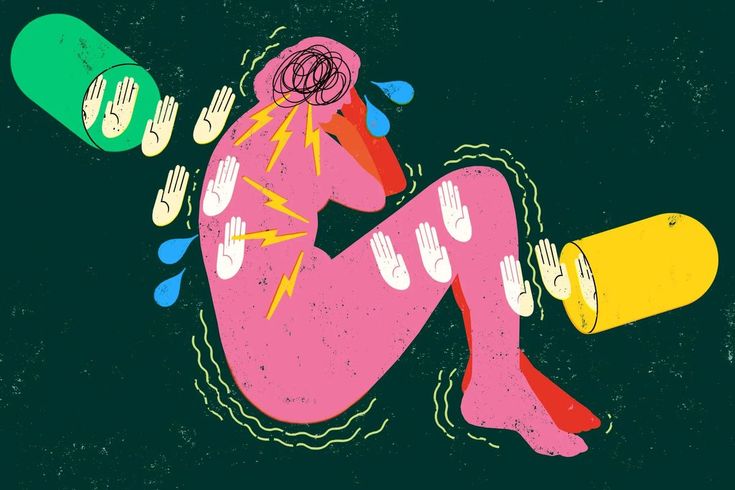
The body has already told you everything. The problem is that you have been looking for someone else to confirm it. This is what happens when you fully understand your negative emotions are ruining your mood, yet subconsciously you fully deny that something can be wrong with you. Something remains stuck, humming underneath all that self-knowledge like a frequency you can't tune out. Trauma is also, at this point, a word that can make people flinch. Overused in some spaces and violently dismissed in others, it carries enough cultural baggage that many people instinctively distance themselves from it, either because it feels too large for what they experienced or because they've watched it become a shorthand for something they don't want to be associated with.
In The Body Keeps the Score, van der Kolk makes an argument that should, by now, be common knowledge but somehow ends up as a hard pill to swallow. Trauma is a sensitive word, and lives in the body without needing to be recognized. Mirroring the world through its lens, yet not calling out its presence. It lives in the body. In the breath that shallows before the mind has registered danger. In the shoulders that rise in a perfectly safe room. In the stomach that clenches during a conversation that, by every rational measure, poses no threat. "Trauma is not what happens to you," he writes, "but what happens inside you as a result of what happens to you." The event ends. The body doesn't receive that information.
This matters more than it might initially seem. It means that the entire architecture of modern self-improvement - the journaling, the therapy, the carefully constructed self-narrative - is operating on a system that trauma doesn't actually run through. The mind can understand everything and change nothing. Comprehension and healing are not the same process, and they don't even use the same language.
Consider how it could look in practice. Body Dysmorphic Disorder makes the body's dishonesty paradox visible in its most concentrated form. Research proposes that BDD involves defective interoception, with perceived appearance flaws resulting from interoceptive prediction errors that cause body parts to be experienced as fundamentally "not right". The body sends a signal, and our mind creates a whole different story around it. That story feels irrefutable because it is grounded in genuine sensation, yet that sensation has been catastrophically misread.
Psychological vocabulary has never been more widely distributed. Isn't that a great improvement? Technically, yes, but now it almost feels like people describe their nervous systems in their Instagram captions using therapy-speak without really understanding or delving into what it means. There is more self-awareness than at any previous point in recent history. Yet somehow, rates of anxiety, chronic pain, autoimmune conditions, and dissociation have not responded accordingly because something is not translating. Trauma becomes encoded not just as a narrative memory but as a somatic memory, a body-based pattern of tension, hypervigilance, and dysregulation that continues firing long after the danger has passed. In individuals with PTSD, dissociative symptoms, including depersonalization, the feeling of being detached from one's own body, occur in up to 44% of cases.
Usually, psychology refers to this concept as semantic satiation, a phenomenon in which repeated exposure to a word causes it to lose its meaning temporarily. Van der Kolk is precise about what fills the gap when the body becomes a place people can no longer afford to live in. "Self-regulation depends on having a friendly relationship with your body. Without it, you have to rely on external regulation - from medication, drugs like alcohol, constant reassurance, or compulsive compliance with the wishes of others."
The body, unlike the mind, does not perform. Whether we avoid our trauma or attempt to name it, the body, unlike it may seem, is not the problem. In this case, your body is the most effective and honest part of the story.
References
Never miss an issue of The Cognitive Mirror
Get the next one in your inbox. Free, and one click to leave.
0 Comments
No comments yet
Keep reading
A fresh mix from across our archive