
Suits & Schemas: The Bias Behind the Bluff
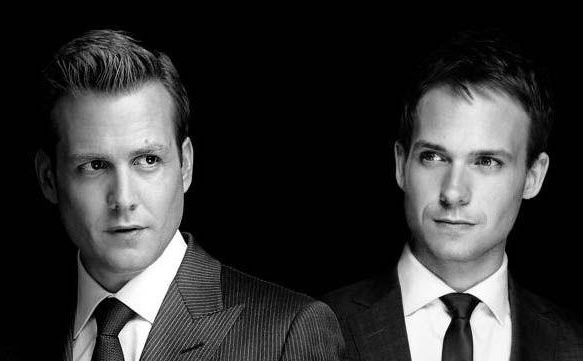
What if the most powerful weapon in Suits isn’t the law, but is actually the mind’s blind spots? Harvey Specter and Mike Ross, the protagonists of Suits, consistently rely on mental shortcuts throughout the show.
Mental shortcuts, formally known as cognitive biases, are tools the brain uses to simplify processing, often leading to systematic errors in thinking that distort judgment and perception. As cognitive misers, humans naturally rely on these biases when making decisions. So more often than not, truth enters the courtroom, and bias leaves with the verdict in Suits.
To begin with, Harvey Specter’s reputation as the greatest closer is not just a product of skill, but also of the framing effect. This bias occurs when individuals react differently to the same decision depending on how it is presented, whether framed in a positive (gain-oriented) or negative (loss-oriented) way. In these situations, the framing itself influences decision-making more than the actual information. This is exactly how Harvey wins cases.
He frequently employs a two-option strategy, framing situations so his opponents appear to have limited choices. By strategically presenting their options, he casts what they want to do as the wrong move and what he wants as the obvious, correct one. This subtle manipulation leads opponents to unconsciously conform, creating an illusion of control. Harvey’s arguments may not always be true, and if his opponents thought logically, they would identify other options, but through framing, Harvey still manages to win. This effect is frequently at play when Harvey aims to push opposing counsel to settle rather than go to trial. He leverages the framing effect by presenting only 2 paths: risk massive losses, public exposure, and reputational damage by going to trial (framed negatively), or minimize losses and walk away safely by settling immediately (framed positively). This tactic gives Harvey a clear advantage, as he frames the options in a way that makes them appear to be the only possible choices, even though alternatives exist, allowing him to control the narrative and ultimately secure the win.
Next, Harvey’s ever-loved apprentice, Mike Ross, exemplifies the halo effect, another powerful cognitive bias. The halo effect refers to the tendency to let one standout trait influence one’s overall perception of an individual, even when that trait is unrelated to other qualities. This happens because the brain seeks to reduce cognitive load by forming rapid, generalized impressions.
This bias is central to Mike’s hiring. This phenomenon is the underlying cause of Mike Ross’ employment. A simple guy with no degree, no credentials, and a risky backstory should’ve been immediately dismissed; however, he ends up being hired at a top law firm. By demonstrating rapid analytical thinking and an exceptional grasp of the law, he creates a powerful first impression of intelligence. This allows Harvey to unconsciously extend that single trait to broader judgments. “He’s smart” translates to “he must be a great lawyer.” “He thinks like a lawyer” translates to “he belongs at Harvard.” “He impressed me instantly” translates to “he’s worth the risk.”
None of these conclusions is logically guaranteed, yet they feel convincing because of the halo effect. Harvey’s belief that raw talent trumps credentials further reinforces this bias, making the decision seem rational rather than biased.
Furthermore, Mike reinforces this perception by regularly doing what no one at the firm expects, proving what others assume cannot be proven. For instance, with the help of his photographic memory, Mike is able to connect niche details and recall key information that is often overlooked, ultimately contributing to the success of the cases. As a result, he accomplishes what seemed unachievable and breaks barriers that were previously unimaginable at the firm. This not only validates Harvey’s initial impression of Mike but also amplifies it, thereby allowing the halo effect to continue in full force as others shape their perceptions of his overall competence based on his intelligence and memory as well.
Ultimately, the cases in Suits may be built on facts, but they are decided on perception. Harvey Specter and Mike Ross don’t just practice law; they navigate, exploit, and capitalize on the predictable flaws in human thinking. In the end, the courtroom doesn’t reward objectivity; it rewards persuasion. And in Suits, that leaves us with a fitting verdict: objection: bias. Sustained.
References
Never miss an issue of The Cognitive Flix
Get the next one in your inbox. Free, and one click to leave.
0 Comments
No comments yet
Keep reading
A fresh mix from across our archive