Severance: What happens when Identity is split by Technology?
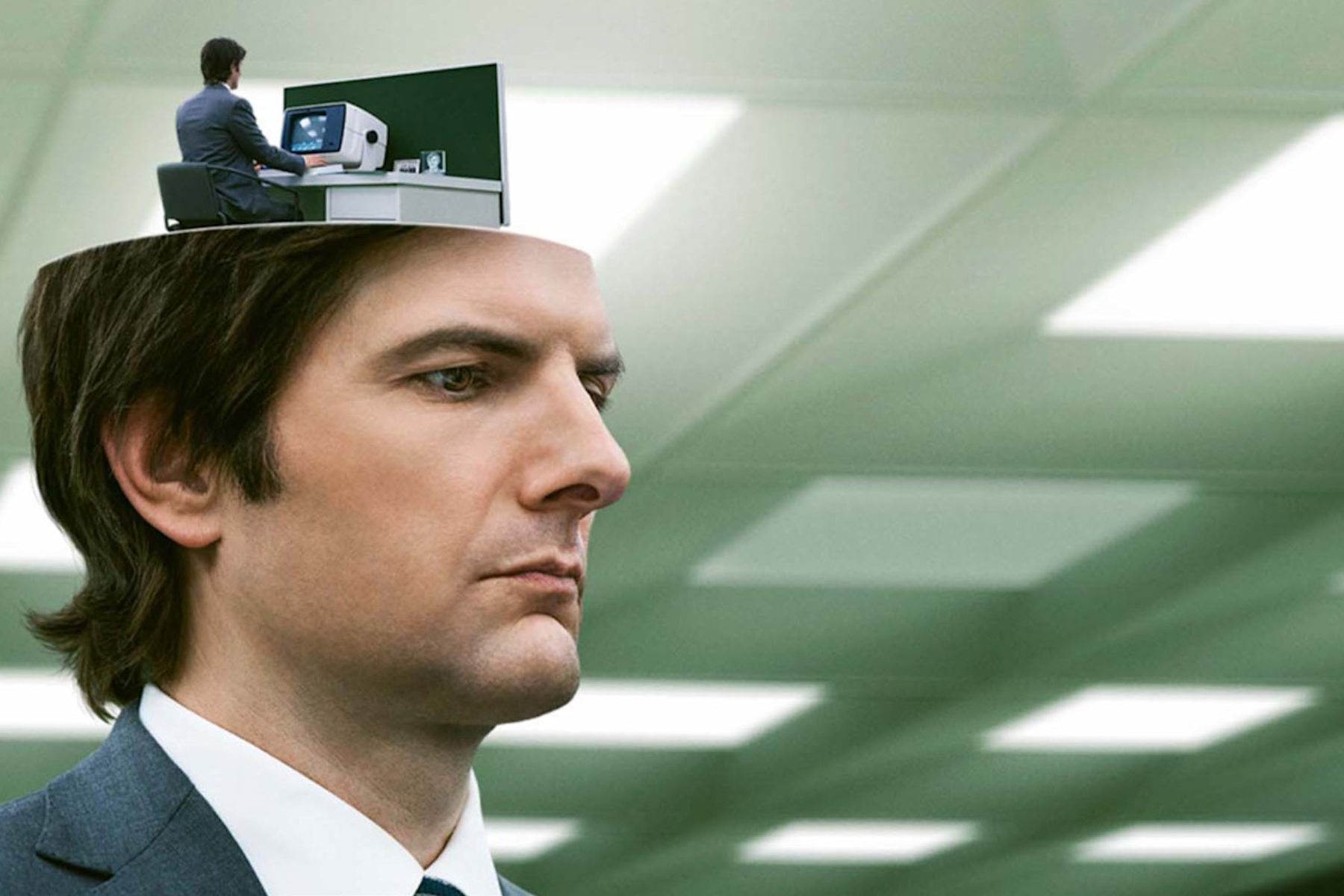
What happens when you’re no longer a version of yourself, but two? In Severance, employees undergo a procedure that splits their consciousness between their work life and personal life, creating two completely separate identities within one person's mind. One exists inside the office, and the other outside of it, both unaware of the other.
At first, the idea does feel almost appealing. No stress from work crossing into your personal life, and no personal problems interfering with your job. But as the show unfolds, that separation starts to feel less like freedom and more centered around control.
Which raises a deeper question: if your identity can be split, who actually gets to decide which version of you is real?
Psychologically, identity is built through our memories, experiences, and environments; these all work together to create a sense of self. According to the American Psychological Association, identity development depends on integrating internal experiences with external influences over time. But Severance disrupts that process completely. Instead of a single, continually evolving identity, we see two fragmented identities, each shaped by entirely different realities and external circumstances.
The “innie” is essentially confined to the workplace, existing only within sterile corporate walls, with no access or understanding of their life outside of it. Their identity is fully constructed by the company, structured, monitored, and controlled. Meanwhile, the “outie” lives freely, unaware of what a part of themselves is experiencing on a daily basis. The result of this separation of identity isn't about balance; it’s separation without consent.
You can see this really well in Helly’s experience at the office, especially when she repeatedly tries to leave but is forced right back in by her outie, who denies every attempt. In one scene, she watches a video of her “outie” calmly telling her that she is not a person, but simply a function of her. It’s quite unsettling because it makes it clear that her identity and autonomy aren’t truly hers at all. Instead of being two equal versions of the same person with different purposes, one is fully in control while the other is trapped within a system so specifically designed to keep her there.
Over time, this raises a much deeper issue regarding autonomy. If one version of you has no choice, no memory, and no control over their daily environment, are they still considered to be independent? Or are they just a version of you that exists only for others' benefits?
You can really see this play out differently across each character. Mark, for example, uses severance as a way to escape his grief, separating himself from the emotional weight he's burdened by in his personal life. However, by doing this, he creates a version of himself that exists without context or even choice. Irving, on the other hand, begins to experience cracks between his two realities, showing that even a system built on strict control cannot contain his true identity. Along with those two, there's Dylan, who has acknowledged his sense of autonomy and begun pushing back against the system in new ways.
Each of these characters shows a different variation of what it means to lose control.
Research discussed in Psychology Today describes autonomy as the ability to make your own decisions rather than having them made for you. In Severance, that ability is entirely stripped away for the “innie,” raising the question of whether a person can truly exist without any control over their own life.
You can clearly see the weight of that loss in Mark’s story, especially through his connection to Gemma. While his outie grieves her as a loved one he’s lost, his innie unknowingly interacts with her in a completely different context, without any understanding or feelings towards who she is and what she means to him in the outside world. Their relationship becomes fragmented, almost split in the same sense that his identity is, showing how an absence of autonomy can truly reshape the self and the relationships that help define it. Even something as personal and deep to us as love isn’t immune to that type of division.
Maybe Severance isn't just about technology, it’s about what happens when control becomes essentially invisible. If identity can be shaped, divided, and managed by external systems, then the question is no longer simply who we are, but how much of who we are is up to us to decide.
References
Never miss an issue of The Cognitive Code
Get the next one in your inbox. Free, and one click to leave.
0 Comments
No comments yet
Keep reading
A fresh mix from across our archive