Separating the Art from the Artist: How Do Morality and Perception Play into Opinion?
With bright colors, lush landscapes, and unique subjects, Paul Gauguin cemented his place in the canon of art history.
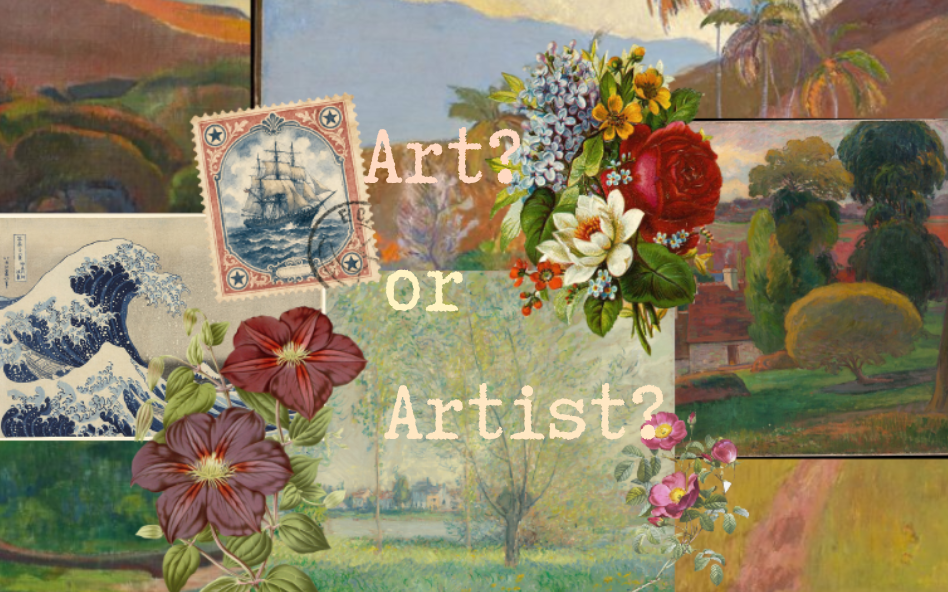
With his paintings of life in Tahiti, he inspired some of the most famous painters of our time, though today he is often recognized for his marriage to multiple underage girls. The cognitive dissonance inspired by an admiration and abhorrence for an immoral artist is precisely what I studied in my 2025 thesis research. Regardless of the positive psychological effects visual art can have, viewing art created by artists perceived as immoral can cause art appreciators to feel guilt or shame for enjoying the work. Appreciation for art is intrinsically tied to morality. In fact, when one views an action that is perceived as morally beautiful or virtuous, the effects that can be seen in the brain are the same as those that can be seen when viewing a beautiful object. Therefore, when issues of an artist’s immorality arise, it is important to recognize how those issues shape our engagement with their work.
The study aimed to provide empirical evidence not only for psychological theories of bias but also for the effects of perceived immorality on behavior, specifically when viewing and interacting with a visual artist's work. I showed participants either positive or negative information about the artist Paul Gauguin, then asked questions about their opinions of his work. Fascinatingly, the results showed that for most participants, knowing the artist was immoral strongly affected not only their opinion of the pieces, but also their intention to interact with them further.
The study aimed to provide empirical evidence not only for psychological theories of bias but also for the effects of perceived immorality on behavior, specifically when viewing and interacting with a visual artist's work. I showed participants either positive or negative information about the artist Paul Gauguin, then asked questions about their opinions of his work. Fascinatingly, the results of this study revealed that for most participants, knowing the artist was immoral had a huge impact not only on their opinion of the pieces, but their intention to interact with them further.
This study shows that the type of information a viewer consumes affects opinion and intentions. This phenomenon has broad societal implications, potentially affecting how
people consume content across multiple areas: social media, where discovering an influencer is immoral can cause complete deplatforming; news networks where immorality can affect how people view credibility; and museums, where the psychological effects of viewing art by immoral artists can pressure institutions to move works to storage or to add contextual labels that prioritize the artist's biography over their technique.
Separating the art from the artist is a topic of discussion not only in academic circles but also in broader conversations about pop culture. From curators to influencers, the decision to showcase or promote a creator’s work has become a balancing act between history and moral accountability. I am proud to say that my study provides empirical evidence that the information art viewers encounter before viewing affects their opinions when they view it. Ultimately, these findings support the idea that the brain cannot separate the art from the artist, as moral integrity and art are intertwined.
Please feel free to read the full thesis text!
References
0 Comments
No comments yet
Keep reading
A fresh mix from across our archive