Normal People: Did You Choose This Love, or Did It Choose You?
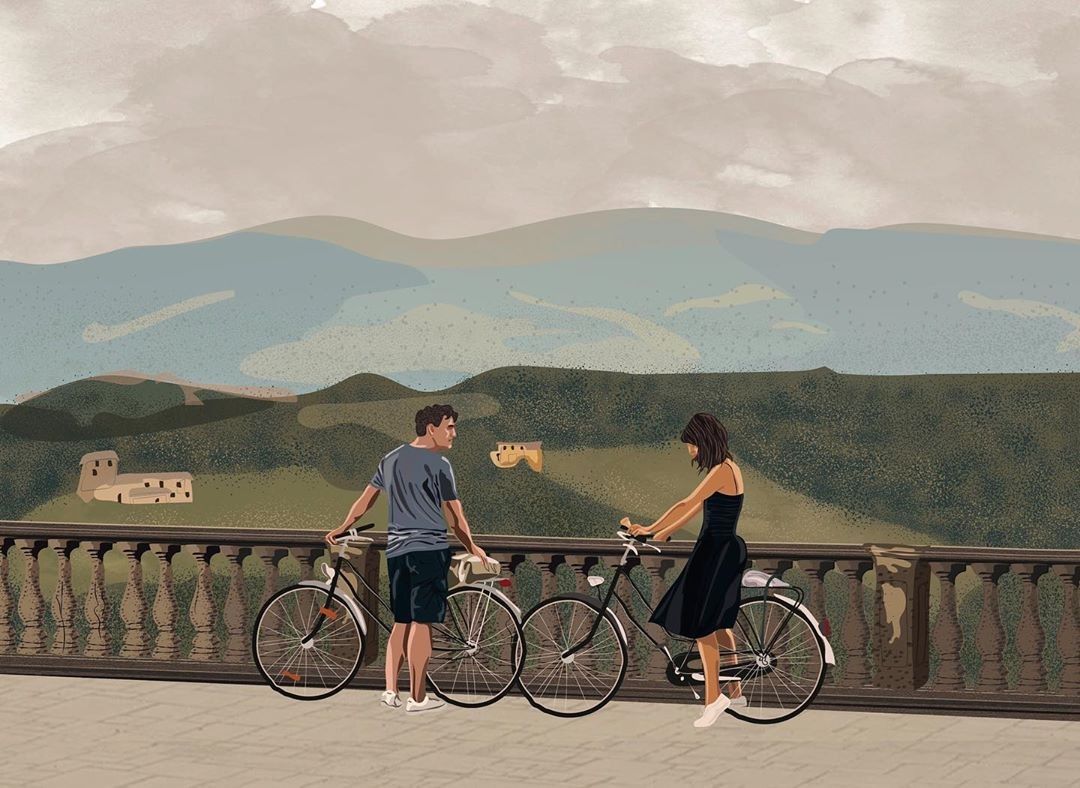
We spend a lot of time asking why love is so hard, yet we spend very little time asking where we learned what love was supposed to feel like in the first place. Rooney doesn't editorialize. She simply places two people side by side and lets the distance between them do the work.
Normal People is often described as a love story. Yet it is more precisely an attachment edification. Two people who never learned how to be loved, attempting, repeatedly and imperfectly, to teach each other. What the novel holds up is a mirror, not to romance, but to the relationships that shaped us long before we were old enough to choose one. Research suggests this is less coincidence than design: intimate relationships tend to recreate, with unsettling precision, and the emotional dynamics of the homes we came from (Lampis, 2015).
Marianne's home was cold in a particular way. Her mother's indifference and her brother's cruelty didn't break her loudly. They simply taught her what to expect from people who are supposed to love you. Rooney shows us this early at a house party, surrounded by their classmates. Connell looks past Marianne as if she were part of the furniture. She already knows he will. What Rooney captures is not cruelty; instead, it’s the silence of someone who accepts the kind of treatment they think they deserve. Research on childhood emotional environments shows that children raised without consistent warmth internalize a core belief that they are undeserving of care, a self-concept that doesn't dissolve when the environment changes but instead seeks confirmation in the next relationship (Gosselin et al., 2024). The men Marianne gravitates toward are not accidents, but simply patterns with distinct origins. The pull she feels toward relationships that hurt her can easily be mistaken for desire, but genuine yearning and familiarity are not the same thing, even when they feel identical from the inside. Psychologists describe this as the introjection process, where we treat ourselves as early caregivers who once treated us, recreating in adulthood the emotional conditions of childhood, even when those conditions were harmful (Woehrle et al., 2022).
Connell's wounds travel and quietly dictate his life. His escapism doesn't announce itself. It looks like ease, like someone who takes up space naturally, until he needs to make an important decision. Anxious and avoidant attachment patterns find each other with a dire precision, each one confirming what the other already believes about themselves (Lefebvre et al., 2021).
What shifts, for both of them, is not dramatic. Connell goes to therapy. Marianne slowly begins to name what she has accepted as normal. De Botton argues that real change begins with awareness rather than pressure – that love practiced with intention, not just feeling, is what actually moves people (de Botton, 2019). Psychologists call the result "earned security": the process by which someone with an insecure attachment history gradually builds a more stable sense of self through honest relationships, noticing their own patterns, and the unglamorous work of choosing differently (Dansby Olufowote et al., 2019). It doesn't retroactively require a perfect childhood. It requires, as De Botton might say, deciding that love is something you practice rather than something that you simply accept (de Botton, 2019).
Rooney's final pages are quiet on this point. "He brought her goodness like a gift, and now it belongs to her. [...] Really, she thinks, really. People can really change one another." (Rooney, 2018, p. 184). As the word really appears twice, it manifests someone who is in the middle of convincing themselves and choosing without certainty. That hesitation is not a weakness. Change doesn't arrive with conviction; it arrives with a willingness to keep asking and opening yourself to something new, even without an answer.
The question is never whether your past shapes you. It does. The question is whether you are willing to look at the mirror long enough to see it, and then, slowly, to take a step towards something different.
References
Never miss an issue of The Cognitive Mirror
Get the next one in your inbox. Free, and one click to leave.
0 Comments
No comments yet
Keep reading
A fresh mix from across our archive