
Minecraft & Existential Freedom
What does one do when overwhelmed by the chaos of the Universe or the unpredictability of life? They play Minecraft.
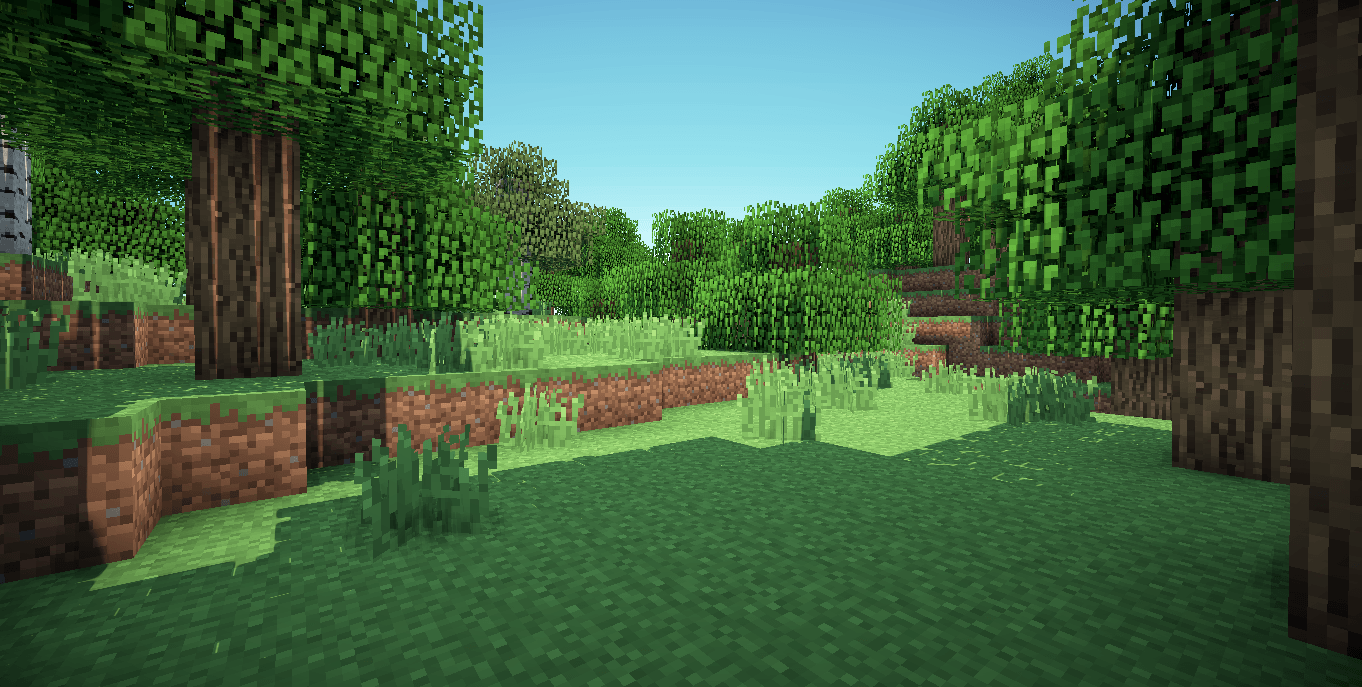
Veteran players know that the core experience of Minecraft lies in complete ambiguity. A fresh experience of Minecraft would involve spawning in a world composed entirely of cubic graphics that crudely depict the natural world. Beyond this, you are given little to no guidance on how to proceed. You can learn the mechanics from outside sources, but the core gameplay lies in the lack of any particular goal to accomplish. Despite this lack of an objective goal, why is the game played by people for hours on end? What does Minecraft provide that motivates people to explore, create, or innovate?
Though there are many theories about the mechanisms of human motivation, with some well-known examples like the pursuit of power or recognition, one theory ambitiously seeks to explain the fundamental motivation underlying human activity. In The Denial of Death, cultural anthropologist Ernest Becker argues that the primordial motivation behind human creation and action is the aversive awareness of our own mortality. His ideas have been influential in modern academic psychology, inspiring the development of Terror Management Theory (Terror Management Theory, 2015). Becker emphasizes that humans create symbols to achieve a sense of symbolic immortality, giving rise to culture, art, and other shared symbolic systems.
Given this, we appear to have a specific lens for storytelling and a motivation for creating meaning, and Minecraft provides a unique environment in which to most tangibly manifest these tendencies. For one, the game itself mirrors the structure of real life: complete autonomy, aspects of labor and reward, enemies, and a physical world that, more or less, shares the same logical properties as the real world.
Secondly, as Becker puts it, “The key to the creative type is that he is separated out of the common pool of shared meanings” (Becker, 1973). Given that you are completely alone (assuming the traditional Minecraft experience of single-player survival), there is no “common pool” of meaning to partake in; in this, you are forced, or rather liberated, to create your own meaning. Dirt may not be considered conventional building material, but you may hastily compile a few blocks of dirt for quick shelter during the night, and declare this configuration to be a “house”. This lack of meaning competition, combined with the discussed real-world familiarity, creates a conquerable world for the player to confront existential ambiguity in a way that is not possible in real life.
According to a research review by Minecraft Education (n.d.), Minecraft, attributed largely to its capacity for autonomy and exploration, enables players to effectively improve higher-order skills such as creativity and critical thinking while engaging through intrinsic motivation. It has also been found to help neurodiverse populations learn in a low-anxiety environment (Zolyomi & Schmalz, 2017). These findings speak to the benefits Minecraft may have for the processes of abstract thinking. Since a Minecraft world is a purely symbolic environment, it may be interpreted as a kind of ‘symbolic simulation’ of real life, acting as a canvas to reflect internal experiences in the form of interactive art. Integrating the established symbols from the real world, you may find novel, or simply more accessible, ways to configure them: you could build a humble farm, or optimize it with elaborate redstone mechanics. You could tame a dozen wolves and become the formidable Wolf Lord, or you could stumble upon an orphaned wolf pup, give it a name and a home, and cherish it as a loyal companion with a status transcending the code it’s made of.
Though humble in concept and appearance, Minecraft is beloved by many for what it provides. Through the many adventures exploring the seemingly infinite biomes of the world (and beyond it), navigating the winding caves with anticipation and caution, building monuments and buildings restricted only by imagination, you may feel that a part of you has healed and grown. How could it be, when you stand in a world with no meaning or apparent significance? Why did you keep going, with no one to watch you? Because of the simple fact that you were there. You were there, and it was you who slowly figured it all out and mapped the world through your sole expedition; to you, this mattered. And with each adventure and memory, each creation and loss, it mattered more still. Setting aside the technical perspectives and analyses, Minecraft was for you, and in this lies its significance.
References
Never miss an issue of Guest Contributions
Get the next one in your inbox. Free, and one click to leave.
0 Comments
No comments yet
Keep reading
A fresh mix from across our archive