
Little Women, Big Choices
Little Women is a literary classic that has captured the hearts of many for over a century. The story has survived the test of time.
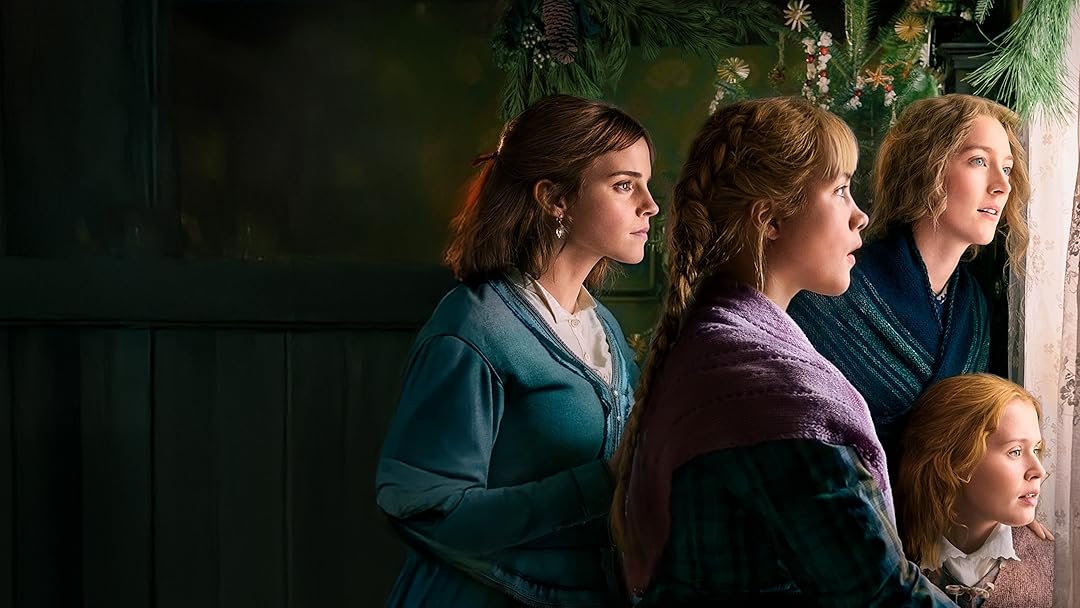
Little Women is a story originally written by Louisa May Alcott and published in two volumes in 1868 and 1869, respectively. Over the last century, the story has been adapted for performance several times and across multiple media, ranging from stage productions and radio shows to film. It’s a story that has captivated audiences of multiple generations and is considered a literary classic. This is because the March sisters aren’t fully fictional; they embody the hopes, dreams, and spirits of real women. The ambitions and struggles of Meg, Jo, Beth, and Amy are ones that women today still connect with. While women may no longer be forced into as tight a box as they once were, many of the same societal expectations still ring true. Through the March sisters, we see the frustration that accompanies this pressure and their perseverance in pursuing their dreams. In this article, we will analyze the 2019 adaptation of Little Women, directed by Greta Gerwig, and how she highlights each of the March sisters' fulfillment.
A fascinating aspect of the March sisters is their differing goals and how they navigate achieving them despite the social expectations of women in the 1860s. Each sister has her own artistic talents: Meg is an actress, Jo is a writer, Beth is a musician, and Amy is an artist. Women at the time faced significant difficulty accessing these spaces, with their work often seen as amateurish and unrealistic as a career. All the sisters, except Beth, acknowledge this limitation at one point or another, with Jo and Amy being the most frustrated by it. This frustration with society also connects to each girl's sense of fulfillment and joy.
Swiss psychologists Doris Baumann and Willibald Ruch define fulfillment as “a cognitive-affective experience that is characterized by a sense of wholeness, congruence, and value towards one’s self, life, and impact” (Baumann and Ruch, 2025). What this looks like for each individual varies vastly from person to person, with no two people sharing the same goals and ideals. While a sense of fulfillment is subjective, we can still research and find the most common themes. Baumann and Ruch classify fulfillment into four categories: “(a) fulfillment in an activity, (b) fulfillment in a role or life area, (c) a fulfilling life in the present and a specific life stage, and (d) a fulfilled life when considered in its entirety and in retrospect” (Baumann & Ruch). These are all things we see the March sisters tackle throughout the film.
Fulfillment in Activity
Fulfillment in an activity often takes the least time to achieve, depending on the activity. This is often because we try to engage in activities we enjoy, whether through a hobby or a sport. If the activity aligns with our interests, strengths, and values, we are highly likely to find fulfillment. The March sister each have moments in the film where they find fulfillment in an activity, that being their art of choice. For Meg and Beth, this fulfillment is pretty unwavering, as they are content to keep these activities as hobbies rather than lifestyles. They feel fulfilled just sharing the experiences of acting or playing music with their family and friends, but don’t necessarily desire to take it further. Jo and Amy, on the other hand, struggle at times with their fulfillment in their respective activities, and for both, this stems from their desire to pursue them professionally. It’s not even necessarily that their skill level or passion keeps them from this fulfillment, but the limitations they face as women in the fields of art and literature. While Jo loves writing, we see her passion lose its spark when she's rejected, and for Amy, it’s when she feels unable to excel over her peers. We don’t see their true fulfillment until the end of the film. We don’t see Jo truly feel fulfilled in her passion for writing until the end of the film, when her book is published, but that’s not the only thing that makes her feel this way.
Fulfillment in Roles or Life Areas
As we get older, we fall into different roles or life areas, each with its own social and personal metrics of achievement/fulfillment. A prime example is the role of parenthood or mentorship, and how we feel a desire for purpose and to make positive impacts on others. We especially see this in Meg and Jo. Meg follows the traditional, socially prescribed desire to start a family and be a good mother/wife; Jo, on the other hand, does not yet desire this but still wants to make an impact through education and by creating equal opportunity. Their difference of opinion about role fulfillment is central to the film, where, before Meg's wedding, she has a heart-to-heart with Jo, explaining that “Just because my dreams are different than yours doesn't mean they're unimportant” (Little Women, 2019). This is a key example of how fulfillment varies so much from one person to another. While Jo doesn’t find it in marriage and motherhood, as Meg and even Amy later do, we see her achieve it through her role in opening her school on Plumfield Estate. She wanted to create a safe environment for both boys and girls to explore their artistic and academic pursuits. This also helps each of her sisters feel more fulfilled, as they get to engage in their activities and share/nurture other pursuits as well.
A Fulfilling Life and A Fulfilled Life
The older we get, the better we can self-reflect on our achievements and place in the world. We have a better understanding of what life looks like outside ourselves, allowing us to value certain aspects more than we might’ve overlooked at one point. With this broader view, we can determine our sense of fulfillment at certain life stages, such as childhood or young adulthood. In Little Women, we see how age has shifted the perspectives and goals of the March sisters, but especially Jo. In her younger years, she was eager for independence and resistant to marriage, as seen in her rejection of Laurie. Yet, towards the end of the film, we see her question whether she wants romance in her life, feeling lonely after Beth’s passing.
While this independence was fulfilling at one point, it is now a source of sensitivity. This pushes Jo to decide whether she wants a life partner, reflected even more in her relationship with Professor Friedrich Bhaer. While the film leaves their relationship ambiguous, we do know that by the end she’s no longer lonely, surrounded by her family and students.
While we may not always feel completely fulfilled in every moment of our lives, it’s more about an overarching, holistic review in which the good outweighs the bad. To decide whether we have lived a fulfilled life, we need to look at the overarching story of our lives. Did we achieve all of our goals, or at least most of them? If the answer is yes, then we can say we lived life to the fullest. At the end of Little Women, we see just that for the March sisters, and while we don’t know how the rest of their lives go, we at least know that by the end of the film they are happy and, most importantly, together. Jo has especially achieved all of her goals: her family is reunited, her sisters are happy, her book is published, and she’s started a school. Holistically speaking, that sounds like a pretty great life, despite the bumps along the way.
An overlooked part of fulfillment isn’t just achieving our goals but also the people we surround ourselves with while doing so, and Little Women perfectly portrays that. According to Dr. Eric Solomon, we underestimate the role of those around us when understanding fulfillment. He cites the Harvard Study of Adult Development’s finding, “that good relationships are the single strongest predictor of health and happiness, more so than wealth or fame” (Solomon, 2024). The March sisters are prime examples of this throughout the film. While yes, the March girls do achieve many of their goals while apart, such as Meg starting her own family, Amy pursuing art in Europe, and Jo writing in New York, it isn’t until they reunite that this fulfillment is truly achieved. The final scene of the film shows the March sisters teaching and sharing their talents with the children at Jo’s new school. They are once again reunited and actively pursuing their passions, creating a space where they are no longer limited by their status as women. Jo has especially achieved her goal; she is a serious, published author, with a story she had nearly full control over.
Little Women shows us that true fulfillment means having choice and autonomy, whether it pushes against or largely aligns with societal expectations. Even when we may be limited, it is possible to find moments of joy and belonging, especially alongside those you love.
References
Never miss an issue of The Cognitive Crunch
Get the next one in your inbox. Free, and one click to leave.
0 Comments
No comments yet
Keep reading
A fresh mix from across our archive