La La Land is a Ghost Story: Why Your Unlived Life Haunts You
In La La Land, the ending is a haunting retelling of a resolution. From the film's dreamlike doppelganger sequence to the broken cadence that closes the story, the movie reveals how the mind conjures vivid ghosts of the lives we almost lived, and how those ghosts refuse to leave once the lights come back up.
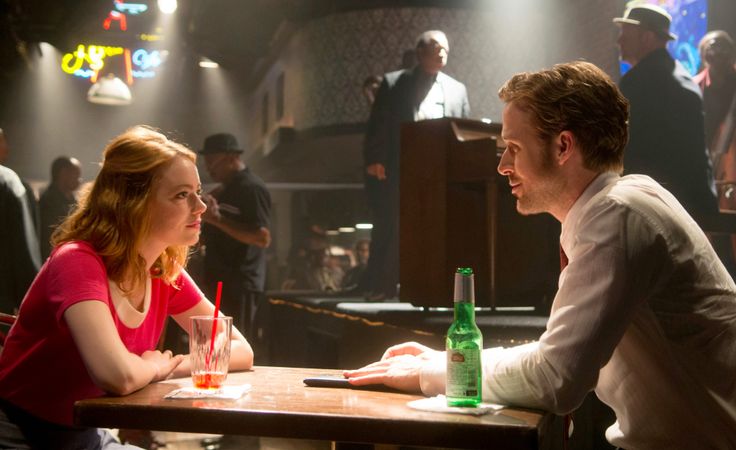
Every haunted house needs a ghost. La La Land's ghost is an alternate version of Sebastian, conjured by Mia's own mind, that only exists for about ninety seconds and never leaves her. Strip away the tap shoes and the Griffith Observatory and what's left is a structure associated with horror. A familiar room, a familiar person, and a version of both that is almost, but not quite, right. Freud called that specific dread the uncanny, the unsettling feeling that arrives when something is simultaneously known and wrong, a double standing where the original should be (Freud, 1919). La La Land does not announce itself as a ghost story. Instead, it spends two hours training you to accept exactly the kind of haunting it's about to deliver.
To begin with, the film's earlier musical numbers foreshadow this eventual haunting. Every time Mia and Sebastian float above the Griffith Observatory or waltz through a sudden constellation of stars, the film asks its audience to accept an impossible, dreamlike intrusion into an otherwise ordinary scene without questioning it. By the time the epilogue arrives, the audience has been thoroughly rehearsed in this logic. You already know how to watch two realities occupy the same frame. By the end, the film uses the same trick to show us a metaphoric ghost.
Furthermore, the moment Sebastian sits back down at the piano in the epilogue, the lighting drops into shadow and shifts into blues and purples threaded with warm light, as the dialogue disappears entirely, and the music slows down to stretch the moment instead of resolving it. This is the visual grammar of a memory, yet paradoxically of something that was never a memory at all. According to the constructive episodic simulation hypothesis, the brain reuses the same machinery it uses to store real memories to construct hypothetical ones, which is exactly why an imagined alternate life can feel disturbingly vivid rather than obviously fictional (Schacter & Addis, 2007). The five-years-happier Sebastian and Mia feel like something being remembered, which is exactly what makes them so hard to shake.
Moreover, the montage of milestones inside that sequence, the apartment, the pregnancy, the piano bar with his name on it, is deliberately blurry, rushed, almost out of focus. That fuzziness mirrors how the mind actually generates counterfactuals. They are not fully rendered alternate timelines, but are fast, half-formed flashes conjured at exactly the high-stakes turning points where a decision could have gone the other way. Norm theory describes this as an automatic process wherein the mind spins up an alternate-reality double of your own life the instant something forces you to notice the fork in the road (Kahneman & Miller, 1986). Watching it happen on screen has the same physical tension as sitting at the edge of your seat during a jump scare, except the thing you're bracing for is grief for a life that was never lost because it never existed, instead of bracing for a monster.
Ultimately, the epilogue closes the loop with an acknowledgement posing as an exorcism. The ghost-Sebastian leads ghost-Mia out of the bar in the same clothes as the present day, walking the exact route the real couple might have taken five years ago, until the film cuts back to the real jazz club, the real Sebastian, and the real Mia, sitting in the same physical room the ghost version just left off at. Two versions of the same people, in the same space, reflects the structure of a haunted house. The dread audiences report at this exact moment is uncanny in Freud's specific sense. The fear of something foreign, but with the vertigo of watching a version of your own life play out just slightly wrong. Additionally, the horror doesn't resolve. In the final moments as Mia gets back down to reality, real-life-Sebastian doesn't play the final note, leaving the cadence broken, unresolved, hanging exactly where the relationship itself was left. Since the peak-end rule tells us we judge an entire experience mostly by its most intense moment and how it ends (Kahneman, Fredrickson, Schreiber, & Redelmeier, 1993), that single unfinished chord is enough to retroactively haunt everything that came before it, the five good years suddenly recolored by the five they didn't get.
Mia pauses at the door and looks back. Sebastian looks up. Neither say anything because nothing needs resolving, only acceptance. That held glance is the moment two people quietly agree that the house is haunted, and always will be.
Some love stories end with a bow. La La Land ends on a chord that never resolves and leaves the room a little haunted on purpose.
References
Never miss an issue of The Cognitive Flix
Get the next one in your inbox. Free, and one click to leave.
0 Comments
No comments yet
Keep reading
A fresh mix from across our archive