Frankenstein: The Runt of the Litter
Is there actually such a thing as being inherently evil, or is this a social construct? In the
book Frankenstein, she shows what society does to people who don't fit the box society
created for them. The creature, ironically mistaken for Frankenstein, is cast out by
society and called the devil. Why does society judge a book by its cover?
What does it mean to be inherently evil? Why do people believe that a person
could be born with a doomed soul? Society makes so many assumptions about others,
lumping its own kind into a category of outcasts.
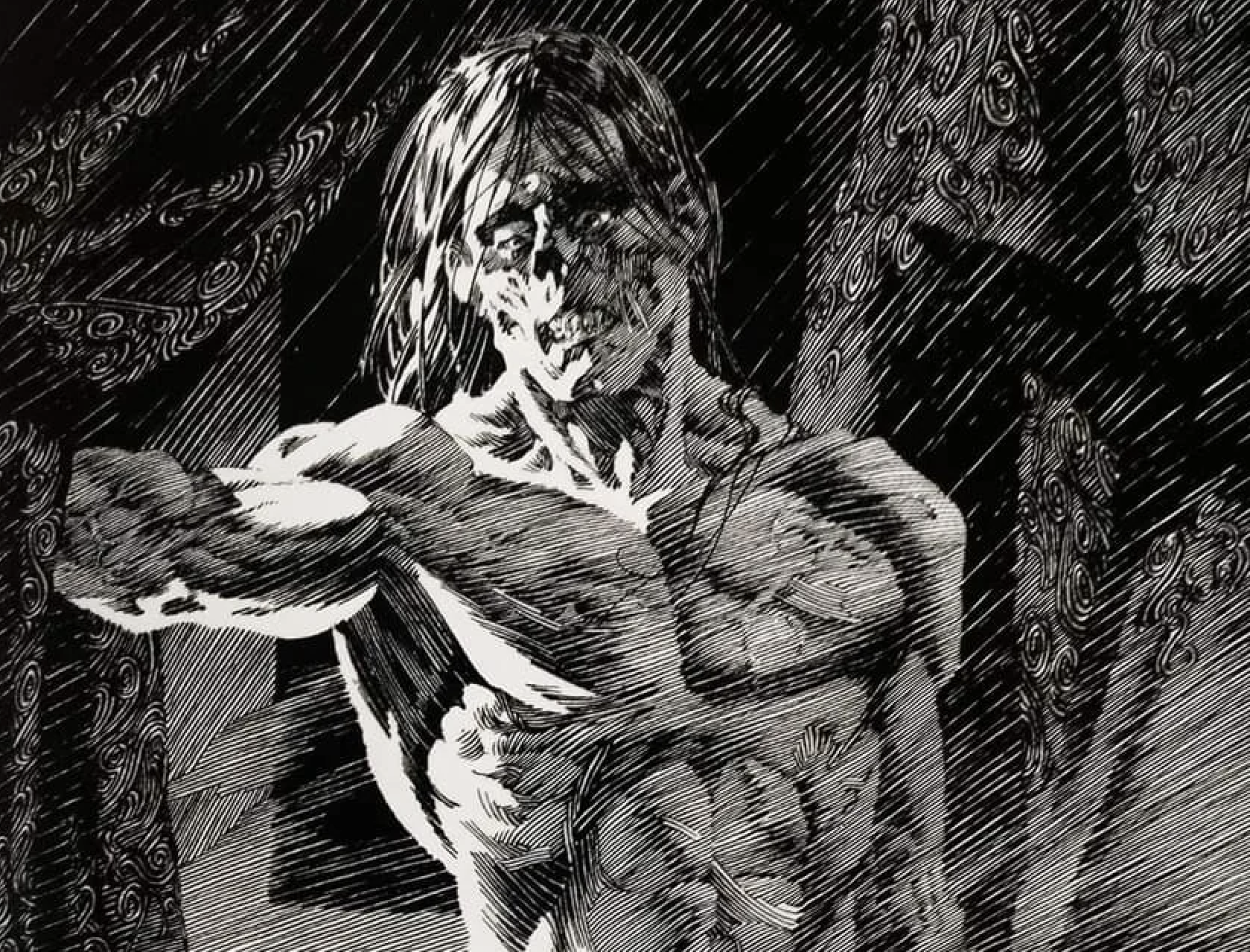
In “Frankenstein,” Mary Shelley explores what makes evil. Victor Frankenstein is
a mad scientist, a natural philosopher, and a chemist. He dabbled in anatomy and
became obsessed with the concept of life, giving him a god complex. Because of his
hubris, Frankenstein created the creature using body parts from corpses he collected
and viewed as “beautiful.” Yet as soon as his creature came to life, Frankenstein took a
single glance into his eyes and rejected him, calling his creation a “wretch.”
Frankenstein was disgusted by his creature’s hideous appearance, pretended he didn't
exist, and cast him out.
Through the creature's point of view, we see how his experiences led him to
commit evil acts. Shelley shows that we create the monster because, as a society, we
reject anything different. As a society, we have created stereotypes of what is considered
evil based on physical features.
Though the creature is bigger than an average human, he is only a newborn. He
had no idea how to navigate the world, and because of Frankenstein's negligence, he was
left to fend for himself. The creature learned to speak from a blind man who didn't know
what he looked like. The blind man's acceptance of the creature is significant because it
shows that, regardless of physical features, others could accept him, suggesting he isn't
inherently evil. Accepted by this old man, the creature thought the rest of the world
would, too. He was quickly proven wrong. As he attempted to save a little girl from
drowning, the village people ostracized and shot at him because of his outward
appearance. Because society rejected him, the creature sought revenge on Frankenstein
for creating him. The creature killed innocent people to make Frankenstein feel as lonely
as he did.
The creature did not come into the world intending to kill people; he only wanted
to be loved and accepted. If society had accepted the creature, would he still be evil? I
believe that in every universe there is never a perfect life; everyone has their highs and
lows. Though the creature isn't a traditional human, he still possesses a very human
trait: his striving to be accepted by others for human connection. Like anyone else, when
he is hurt, he feels a range of negative and possibly destructive emotions. The creature
was born with a pure, innocent soul, but the trauma of rejection pushed him into a
vengeful life.
In a litter of puppies, there is always one that is “ugly”-the runt. Because of our
societal standards, we tend to cast out individuals, like this puppy, for traits we consider
undesirable. This puppy has been treated differently because of an attribute they can't
control. Eventually, this puppy will grow into a dog on the streets, one that has known
nothing but hate and resentment. It is these very emotions that lead to violent
tendencies; one day, this dog will bite a little girl for approaching, and society will label
him the “villain”.
Was the puppy inherently evil? They bit the little girl, so they are a bad dog,
right? Was the creature inherently evil? The creature killed people, so he must be
inherently bad?
Society placed both the puppy and the creature in the category of “ugly”,
ostracizing them from their world because they didn't meet the standards. Both the
puppy and the creature came into the world with nothing but their emotions, which
society quickly crushed by judging them by appearance. Society creates the monsters.
People aren’t born evil; they're misunderstood. A baby has no intentions or
knowledge of killing or harming others; they just have their own emotions. Because
society sets standards for who belongs in the world, it creates “monsters” and “outcasts.”
In reality, outcasts are people who are unique and stand out because they do not fit into
the box society has placed around themself.
References
Never miss an issue of Guest Contributions
Get the next one in your inbox. Free, and one click to leave.
0 Comments
No comments yet
Keep reading
A fresh mix from across our archive