Eleven & the Search for Self
Eleven in Stranger Things is raised more like a weapon than a child. In addition to defeating monsters, her journey seeks to reveal her identity beyond fear, control, and survival. Through companionship, choice, and belonging, Eleven starts to discover that her humanity is independent of her ability to help others.
Who are you when your identity has always been decided for you?
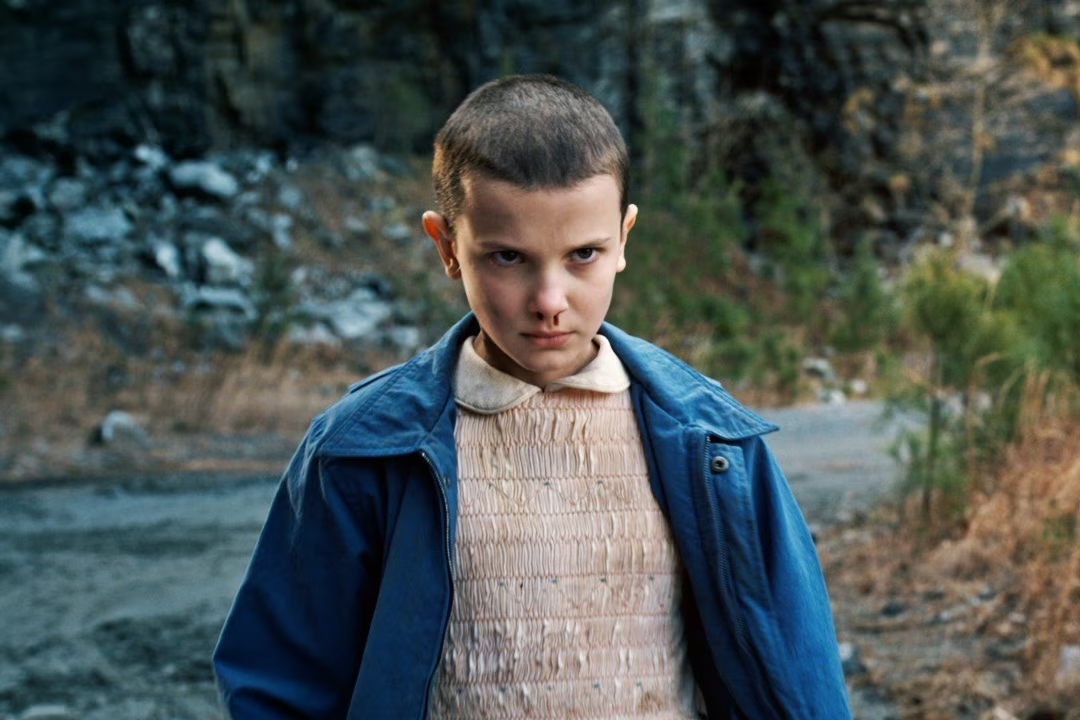
When Eleven first appears in Stranger Things, she lacks a traditional name. She has a number. Her shaved head, limited vocabulary, and medical gown reflect a life marked by imprisonment rather than adventure. While most children discover their identities through family, friendships, mistakes, and play, Eleven is taught to understand herself through obedience and dominance. She is valued for what she can achieve, not for who she is.
Trauma does more than make people fearful of the past. It can also disrupt the process of visualizing a future self. According to psychologists Steven Berman and colleagues, trauma and identity have a reciprocal relationship: traumatic experiences impact how people view themselves, while evolving identities influence how they interpret what occurred to them. For Eleven, this means that the laboratory does more than just regulate her environment. It tells her the first thing she knows about herself: she is an experiment, a weapon, and a threat.
Eleven's actions can also be explained by a concept called learned helplessness since she has little control over her body or decisions as a child. This phrase was first used in a study to characterize the potential consequences of someone experiencing uncontrollable distress on a regular basis. Eleven is by no means defenseless, but she was brought up in a society that values obedience and punishes defiance. Thus, it takes more than just getting out of the lab to reclaim her life. She has to understand that her decisions have an impact.
This is why some of Eleven's most memorable moments have nothing to do with supernatural powers. Choosing her own clothes, making friends with Max, bickering with Hopper, and selecting who to trust may seem normal in comparison to confronting creatures from the Upside Down. Psychologically, however, these moments are significant. They allow her to experiment with preferences, boundaries, and relationships, which are the everyday experiences that shape her identity.
Her interactions do more than just make her happy; they also help her understand herself better. According to research, the need to develop long-term interpersonal relationships is a fundamental human motivator. Mike and his friends make Eleven feel wanted, while Max encourages her to pursue hobbies other than Mike and her powers. Hopper's care is inconsistent and occasionally controlling, but it also raises the possibility that an adult can protect her without exploiting her. Supportive connections cannot heal trauma, but they can help children develop resilience, agency, and a sense of security.
However, belonging does not necessarily result in identity. Eleven frequently defines herself through the people she loves in the same way that she did through the laboratory. Her development requires her to understand that connection and independence are not mutually exclusive. She may belong to others without letting them shape her entire sense of self.
This struggle comes to an end in Season 5, when Eleven decides to stay in the falling Upside Down so that her blood can never again be used to open the portals. Although her apparent sacrifice appears to conclude her story, the ending leaves her fate undetermined, implying that Kali may have assisted her escape to a quiet life beyond the government’s control. Psychologically, it is significant since Eleven ultimately makes the choice, not Brenner, the lab, or even her friends. Her decision is complicated because independence appears to necessitate her separation from those she loves. Whether she dies or survives in hiding, she eventually takes control of her own narrative and prevents others from determining her purpose.
Eleven's greatest conflict is thus not with the Demogorgon, Mind Flayer, or Vecna. It contradicts the assumption that her worth is determined by her usefulness, power, or willingness to devote herself. Her experience reminds us that survival and healing are not synonymous. Survival asks, "What should I do to stay safe?" Healing raises a harder question: “Who can I become now that I have a choice?”
For someone whose life started with a number, rescuing the world may not be the most impactful act. It is realizing that she deserves to live a life within it.
References
Never miss an issue of The Cognitive Clash
Get the next one in your inbox. Free, and one click to leave.
0 Comments
No comments yet
Keep reading
A fresh mix from across our archive