Dory and The Science Of Focus and Forgetting
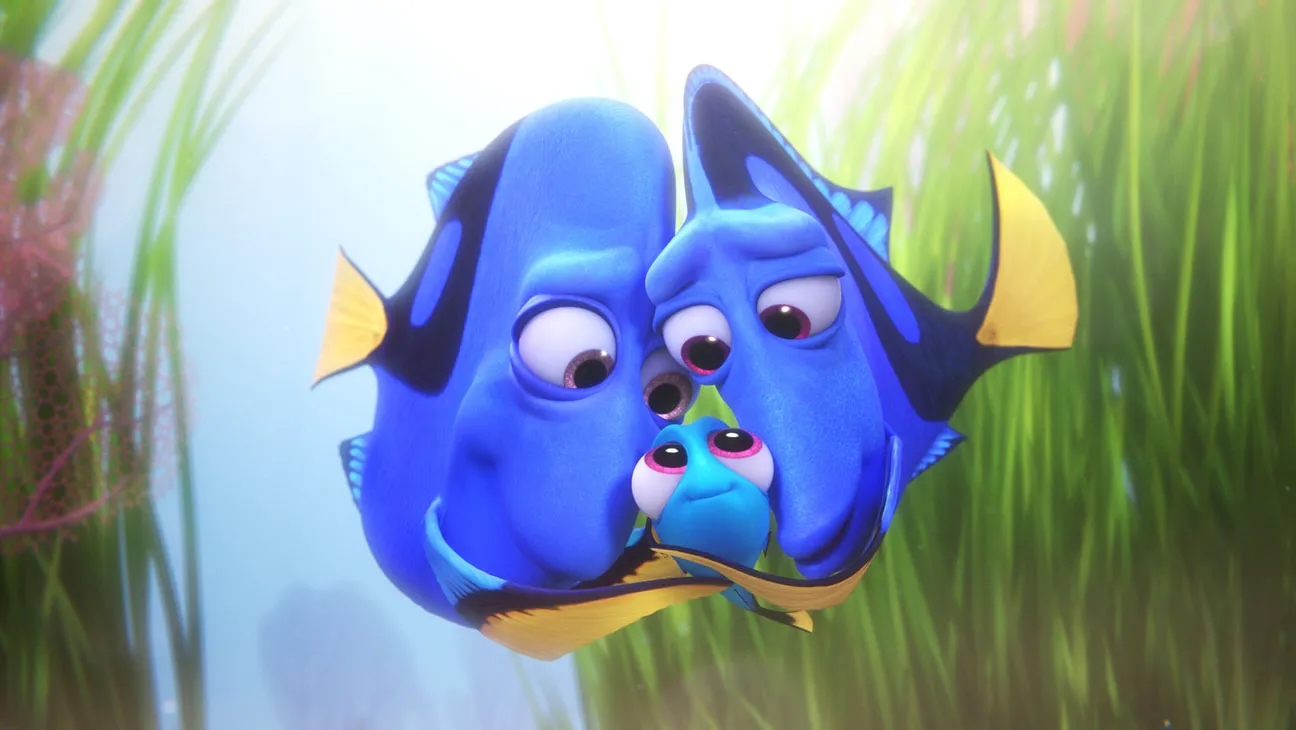
When I think about focus, I typically envision control: being able to hold on to a thought, follow it through, and resist distraction. But watching Finding Nemo made me question that. Dory, who is forgetful, scattered, and eternally optimistic, invites us to reconsider something we take for granted. Memory is often treated as a measure of competence.
Initially, I thought of Dory as chaotic. She forgets names during conversations, loses track of directions, and frequently resets. But the more I sat with it, I realized her mind isn't simply flawed; rather, it's unique. From a psychological standpoint, Dory struggles with working memory, which is the system that allows us to temporarily store and use information. Working memory is crucial for attention and decision-making. So when that system fails, the world becomes harder to track.
What stands out to me is that Dory doesn't fight that reality. She moves with it. One instance that captures this is when Marvin and Dory discover themselves inside the whale. When faced with uncertainty, Dory encourages Marvin to let go and trust the situation, even if it appears illogical. She doesn't rely on memory or meticulous planning; she leans into instinct. There's something liberating about the way she lives in the moment. Robert Kraft describes forgetting as both a fault and a function. It allows our brains to filter out irrelevant information, preventing us from being overwhelmed (Kraft, 2024). Dory, in that way, is continually letting go. Not by choice, but by nature.
As a result, she approaches difficulties in unconventional ways. When memory fails her, she relies on instinct, emotion, and determination. Her optimism does not feel foolish; it feels important. Research suggests that when we are unable to retain knowledge for long, the brain shifts its focus to what is directly relevant in the moment (Cowan et al., 2023). Watching Dory, I see that play out. She may not have a set plan, but she remains engaged with whatever is in front of her, which is enough to keep her moving forward. This is especially meaningful in Finding Dory, where Dory reunites with her parents. Despite spending years apart and her inability to retain most memories, fragments remain. Her parents, in turn, have faith that she would find her way back to them if she “just keeps swimming.” That moment proves that even when memory fails. Something deeper, like emotional connection or repetition, can endure.
What resonates with me the most is how she confronts failure. Dory cannot dwell on mistakes or replay what went wrong. Each moment feels new to her. Past mistakes don't burden her because she does not recall them. While that presents obvious difficulties, it also gives her the confidence to keep striving.
I don't believe that the lesson here is that forgetting is superior to remembering. However, Dory shifts how I think about attention. Perhaps it's not always about clinging to everything perfectly. Maybe it's about carrying on nevertheless and trusting that even if we lose track, we can still find our way.
Dory’s “just keep swimming” seems more like a way of thinking rather than a catchphrase. And honestly, it’s something I am still learning to do.
References
Never miss an issue of The Cognitive Clash
Get the next one in your inbox. Free, and one click to leave.
0 Comments
No comments yet
Keep reading
A fresh mix from across our archive