
Death and Mortality in “Hard Times at the Huskin’ Bee” in Over the Garden Wall
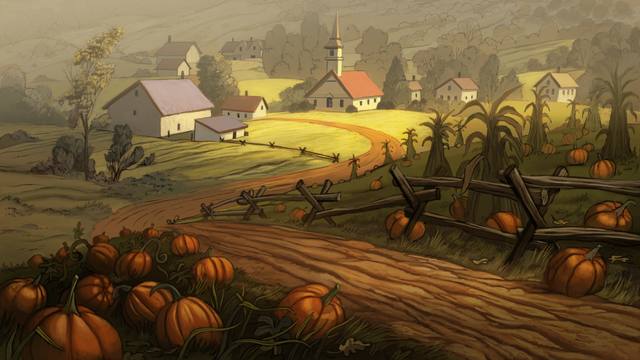
As Wirt and Greg travel deeper into the Unknown, a place filled with mysteries that they’ve found themselves lost in, they run into a talking bird, Beatrice. Together, they walk to a seemingly abandoned village named Pottsfield. To Wirt’s realization, the village is inhabited by pumpkin-wearing skeletons, governed by a giant pumpkin named Enoch, who are celebrating their “harvest”.
Uncertainty-identity theory, in relation to the uncertainty of life after death, is the feeling of uncertainty and its relation to how one should behave/feel about death. In the article, “Fear and uncertainty in the face of death: The role of life after death in group identification," identifying and relating to others who are uncertain about death reduces self-uncertainty. It explains why and how people identify, form their ideological views, and behave. The Pottsfield villagers have warmly welcomed death and spend their time together in the “afterlife,” using pumpkins and other crops to hide their skeletons and start a new life.
The uncertainty of death does not drive these people together; instead, the acceptance and somewhat excitement of death bring this community together. Similarly, Christianity, specifically the belief in heaven, is a driving force in how people perceive death and the potential/existence of an afterlife. The head councilman of Pottsfield, Enoch (a biblical figure who “walks with God”), is evidence of this.
On the other hand, Wirt is fearful of death. When completing their manual labor service for trespassing, Wirt’s main worry became his potential death. Throughout the series, Wirt’s primary goal is to get Greg and him home. In particular, to stop Wirt’s crush from listening to the embarrassing recording of his confession. Paul T. P. Wong describes this as meaning management theory.
Wirt’s lack of a sense of self and goal of returning home makes him afraid, or avoidant of death. As the gang’s adventure gets more dangerous, Wirt’s life and Greg’s life become his top priority. Enoch’s chillingly haunting words after asking Wirt if he’d like to celebrate the harvest with the Pottfields villagers, “You’ll join us some day,” bring no comfort.
References
Never miss an issue of Guest Contributions
Get the next one in your inbox. Free, and one click to leave.
0 Comments
No comments yet
Keep reading
A fresh mix from across our archive