
By Night in Chile: Conformity or Peace?
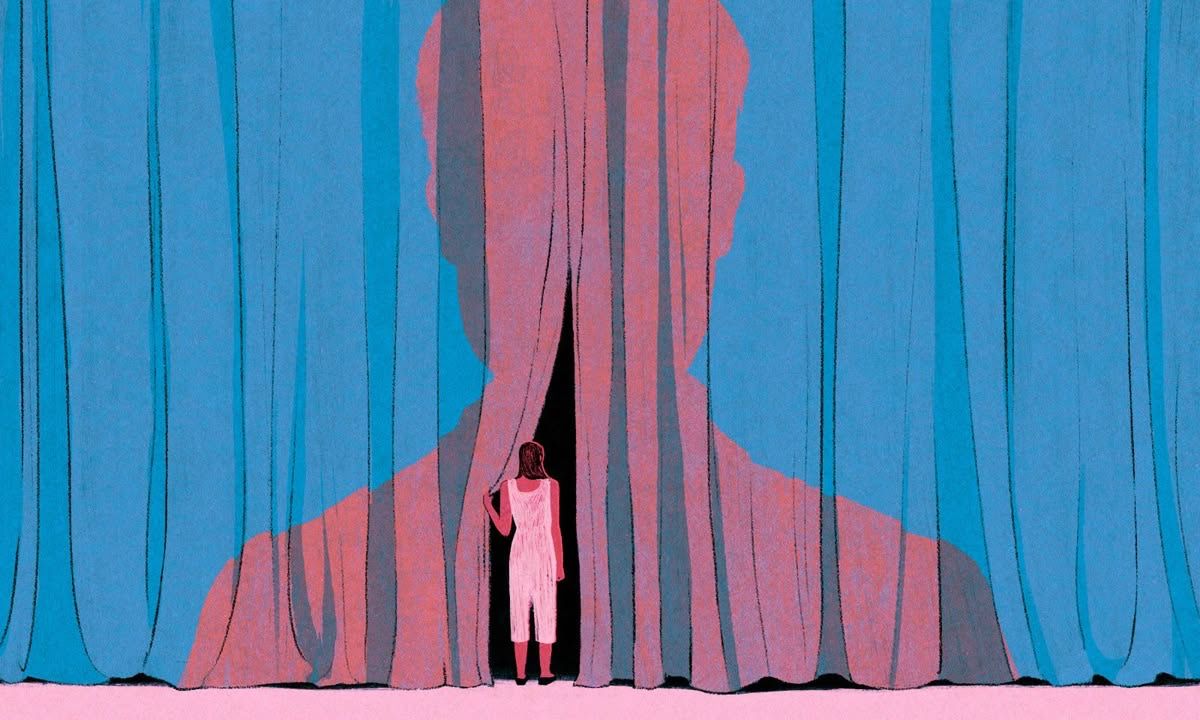
Permanence isn’t peace. Neither is conformity. Silence could be mistaken for a unified peace, while the path to get there would actually determine if it is. Urrutia Lacroix, the narrator and the book's main figure, summarizes his life on his deathbed as a single monologue, opening with his priesthood and devotion to God, as those credentials would settle the account.
From the beginning of the story, sympathy is built through his admiration of literature, his priesthood, and the vulnerability of a deathbed confession. As we find out about Urrutia’s Marxism teachings to Pinochet’s generals, his detachment from the violence around him, and his casual disdain for other people, we are comfortably certain we would’ve acted differently. Refusing the assignment or the opportunity seems so easy, one would think, doesn’t he see how it is harming other people… American psychologist Stanley Milgram wondered about the same question, asking ordinary people to administer what they believed were painful electric shocks to a stranger because an authority figure in a lab coat told them to; 65% went to the highest voltage (Milgram, S., 1963). Now, Mazzoco et al. (2025) reported that, in scenarios involving obedience to authority, people consistently predicted they would refuse the order while simultaneously acknowledging that others probably would not.
We are remarkably generous when imagining our own moral courage and remarkably accurate when predicting everyone else's lack of it (Bostyn et al., 2018). Urrutia so easily ignored and avoided the disdain happening around him; how could he? Sartre would claim it as mauvaise foi, bad faith. The willingness to act is outweighed by the recognition of the costs. Along with Urrutia, it is easier to say we had no choice rather than sit with the weight of knowing we settled for comfort.
Tavris and Aronson (2007) argue that the most dangerous part of self-justification is not the initial compromise itself. What really matters is how you internalize it. Each rationalization would make the next one feel a little easier, and somehow, one would feel completely detached from the version of themselves they so vigorously wanted to build. The psychology around complicity suggests that moral failure is rarely about character and almost always about context (Mazzocco et al., 2025). The conditions that produced Urrutia's silence exist in every workplace, every family, every friendship, where something goes unsaid because saying it would cost more than staying quiet.
Subsequently, psychologist Albert Bandura (2016) identified this idea of moral disengagement as a universal cognitive process, a form of functional isolation, and a significant coping mechanism. The scene at María Canales' house is where Bolaño makes complicity literal. Upstairs, her guests discuss literature and drink wine, while downstairs, her husband tortures political prisoners. A guest once wandered into the basement and found a man bound to a bed, then left in silence. Everybody knew.
Roth and Cohen (1986) would recognize this as avoidance coping at its most extreme. Guilt or disengagement from political or activist movements in our time can be a heavy burden, yet radically avoiding it does not necessarily free you from the obligation to participate. It just means that you lose control over how you choose to participate.
Urritia’s priesthood gave every compromise a higher purpose and every silence a theological justification. Faith at its best demands exactly the kind of moral courage Urrutia avoided, but institutions of any kind can become places where people stop thinking for themselves and call it devotion. Performing a life for a sense of belonging and continuous approval will work because it’s regulated. Conveniently, you can live inconspicuously, and your silence is their peace.
Urrutia’s monologue is meant to be perceived as a final argument. A dying man who spent his life editing himself for others is now running out of time to argue for his truth. At last, assembling his misunderstandings instead of borrowing someone else’s. Slowly letting go of the silence in front of his final judge. And I don’t mean God. The choice to build your peace doesn’t have to be a deathbed confession, just a willingness to see that what surrounds you is a reflection and not a fixed reality. And if there is a final destination, then make sure to commit to every misinterpretation of your path until you realize the final truth was only ever yours.
References
Never miss an issue of The Cognitive Mirror
Get the next one in your inbox. Free, and one click to leave.
0 Comments
No comments yet
Keep reading
A fresh mix from across our archive