
Barbie & The Triple Bind
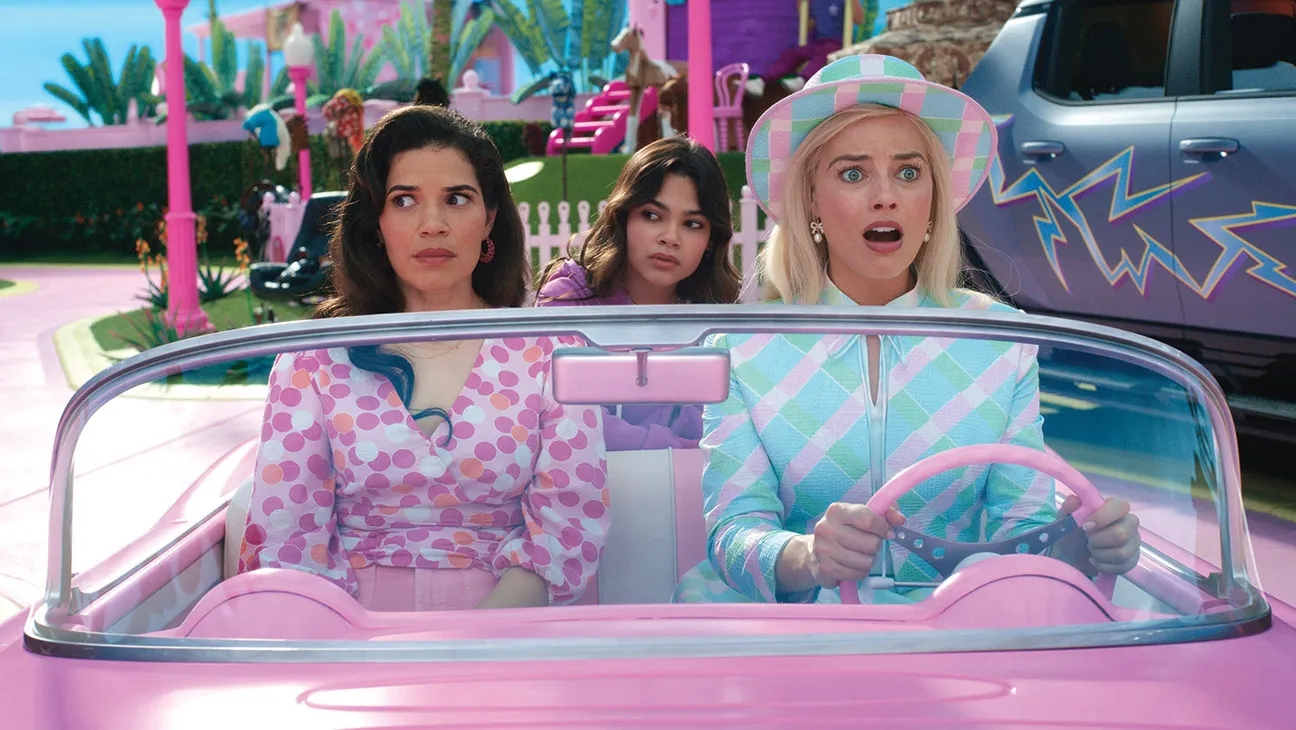
Growing up, I had a strong fascination with a variety of popular franchises, but almost none competed with my love for Barbie. As a girl who loved exploring a variety of ideas and themes, she was the perfect role model. I played Barbie.com religiously and even owned every single Barbie movie until I was 11. This is why, when The Barbie Movie was announced to hit theaters in 2023, I was ecstatic. It truly was such a special time to be a girl, seeing so many women coming together to reconnect with girlhood was inspiring. When the movie was released, I was visiting my aunt, uncle, and grandparents in the Midwest, and we all got dressed up to see it. Truthfully, I was expecting a lighthearted comedy, and while that was a big part of the film, I wasn’t expecting myself and even my grandfather to shed a few tears. As a newly grown adult about to become a college freshman, I found that it shed light on a topic that all women and girls know all too well: It is literally impossible to be a woman.
The conversation around the struggles of women and girlhood is not new; it’s been ongoing for much of human history. The inequality is so ingrained in a vast majority of institutions, ranging from education and the workplace to health care. Psychology, especially, is an area where women are severely underrepresented, with women and men not being viewed more equally until the 1980s, when hysteria was removed as a mental disorder. However, when we look at women’s mental health today, we begin to see an alarming trend, with the rates of depression, anxiety, and trauma-related disorders soaring above those of men. What is happening that's causing this increase, and how can The Barbie Movie help us explain it?
Just like Gloria, played by America Ferrera, says at the start of her monologue, “It is literally impossible to be a woman”. The expectations are too contradictory, meaning that nothing you do is good enough. This is what Dr. Stephen Hinshaw calls the “Triple Bind”, a theory that explains the three contradicting expectations modern girls and women are held to. The expectations go as follows:
1. Be good at all the traditional 'girl' stuff…
2. Be good at most of the traditional "guy" stuff…
3. Conform to a narrow, unrealistic set of standards that allows for no alternative.”
Women are expected to be all “girl” through actions like warmth, kindness, and passivity, but also all “boy” by being competitive, ambitious, and high achieving. Number three concerns the societal expectation that women be beautiful and effortless, often perpetuated by the media.
If we look back at America Ferrera's monologue, we see her acknowledge the ways these expectations collide in just about every line: “You have to be a career woman but also always be looking out for other people.” This is a clear example of how the expectation that women are nurturing and caring contradicts the expectation of ambition and success, especially when it involves not backing down. While there are an endless number of examples to which we can apply the triple bind, we need to acknowledge the most significant part: the psychological impact.
As stated previously, the rates of anxiety, depression, and trauma-related disorders in women have been rapidly increasing in recent decades. In adolescence, the numbers are pretty even for boys and girls, but during the onset of puberty, girls outnumber the boys almost 2:1. According to the American Academy of Pediatrics, a study conducted by the Centers for Disease Control showed that 57% of teen girls experienced persistent sadness or hopelessness in 2021, up from 36% in 2011.” (American Academy of Pediatrics) While this number dropped to 53% in 2023, it is still an alarming trend.
Young women and girls are crumbling under the pressures of these expectations, both visibly and invisibly. Even Barbie, the seemingly perfect woman, crumbles under this societal pressure in the film. Upon leaving Barbieland, we see how much these societal expectations break her down. It mirrors the lesson girls learn upon hitting puberty, when we suddenly become well aware of all the unspoken rules of womanhood. She’s fully perceived externally for her beauty but not internally for her mind or thoughts. We see through the harassment she faces on the street, and even the cruelty of high schoolers, how hurtful this can be, and how it chips away until you crumble. It’s through the support of others, though, we can rebuild ourselves, and we see this in the film as the Barbies band together to reclaim Barbie land.
While womanhood is hard, we still persist, and America Ferrara’s monologue to Barbie highlights that. Despite knowing it’s impossible to achieve all the ideal goals of womanhood, we don’t stop pushing forward, but instead of doing it for society, we need to do it for ourselves. A key message of the Barbie Movie is to love yourself and not let anyone dull your sparkle. Barbie expertly explored the idea of reclaiming pride in femininity, all while deconstructing what that means. It tells us to disregard society's high expectations and instead to feel confident and beautiful in our own skin and aspirations. Seeing this represented in the film hit hard; it made me think of the little girl I used to be, how much confidence I had in myself, and how I took on the world ahead of me. And for myself and many others, it was a spark that reignited the flame of feminine freedom and endurance, even when the road ahead is hard.
References
Never miss an issue of The Cognitive Crunch
Get the next one in your inbox. Free, and one click to leave.
0 Comments
No comments yet
Keep reading
A fresh mix from across our archive